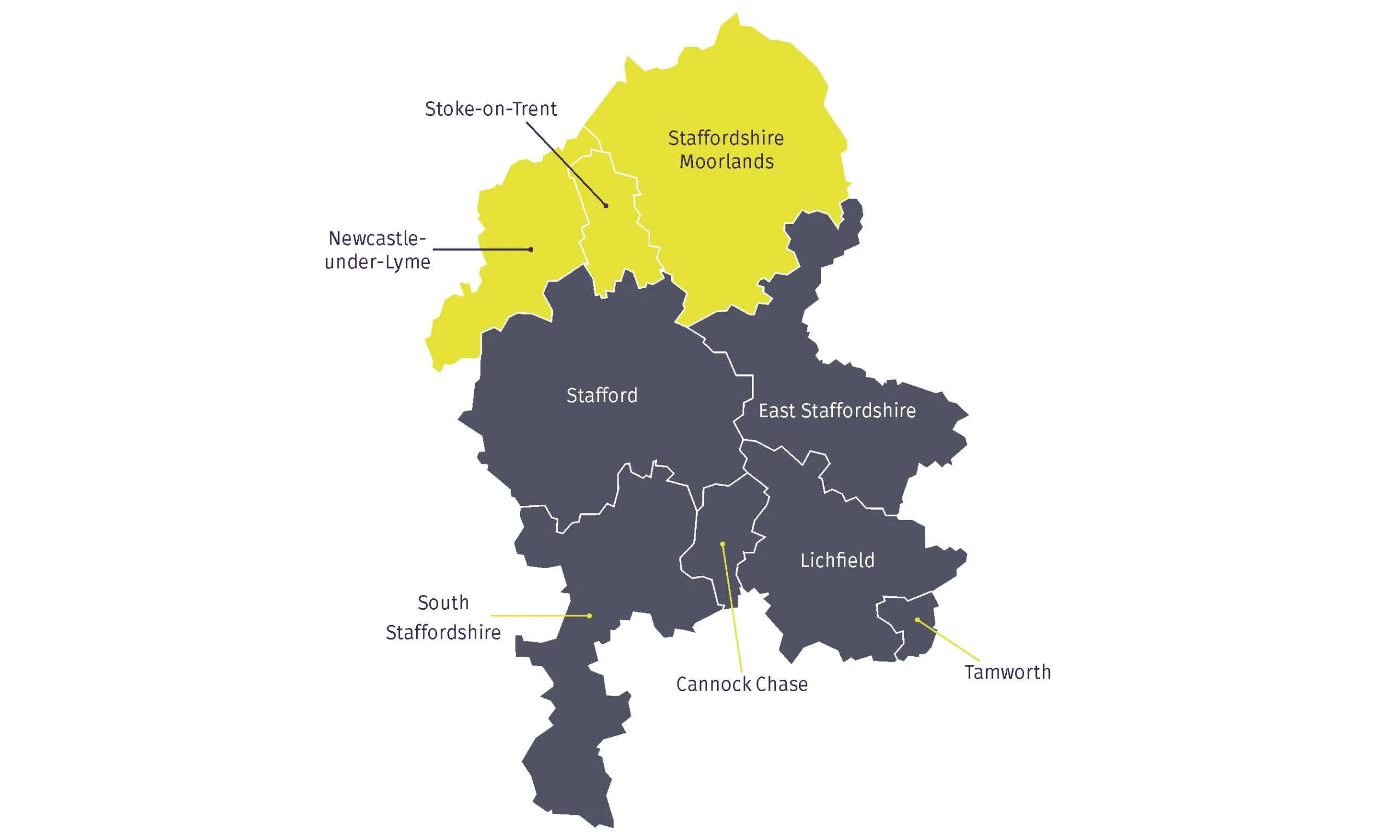
At least 50 country houses have disappeared from Staffordshire, taking workplaces, community connections and family history with them. New analysis explores what their loss could represent today.
At least 50 country houses have disappeared from Staffordshire’s landscape, taking with them not only historic buildings, but workplaces, family stories and connections to communities across the county.
New analysis by Family Tree suggests Staffordshire’s lost country houses could represent around £44.9 million a year in potential heritage value when compared with the contribution made by surviving historic houses today.
The research identified at least 50 named country houses in Staffordshire that have been demolished, ruined or otherwise lost as major historic homes.
Using the modern historic house economy as an illustrative benchmark, Family Tree estimates those properties could represent around £44.9 million a year in foregone economic activity, with approximately £29.9 million potentially linked to spending within local economies.
The organisation says Drayton Manor, near Tamworth, provides one of Staffordshire’s clearest examples of just how much can disappear alongside a country house.
The lost Drayton Manor
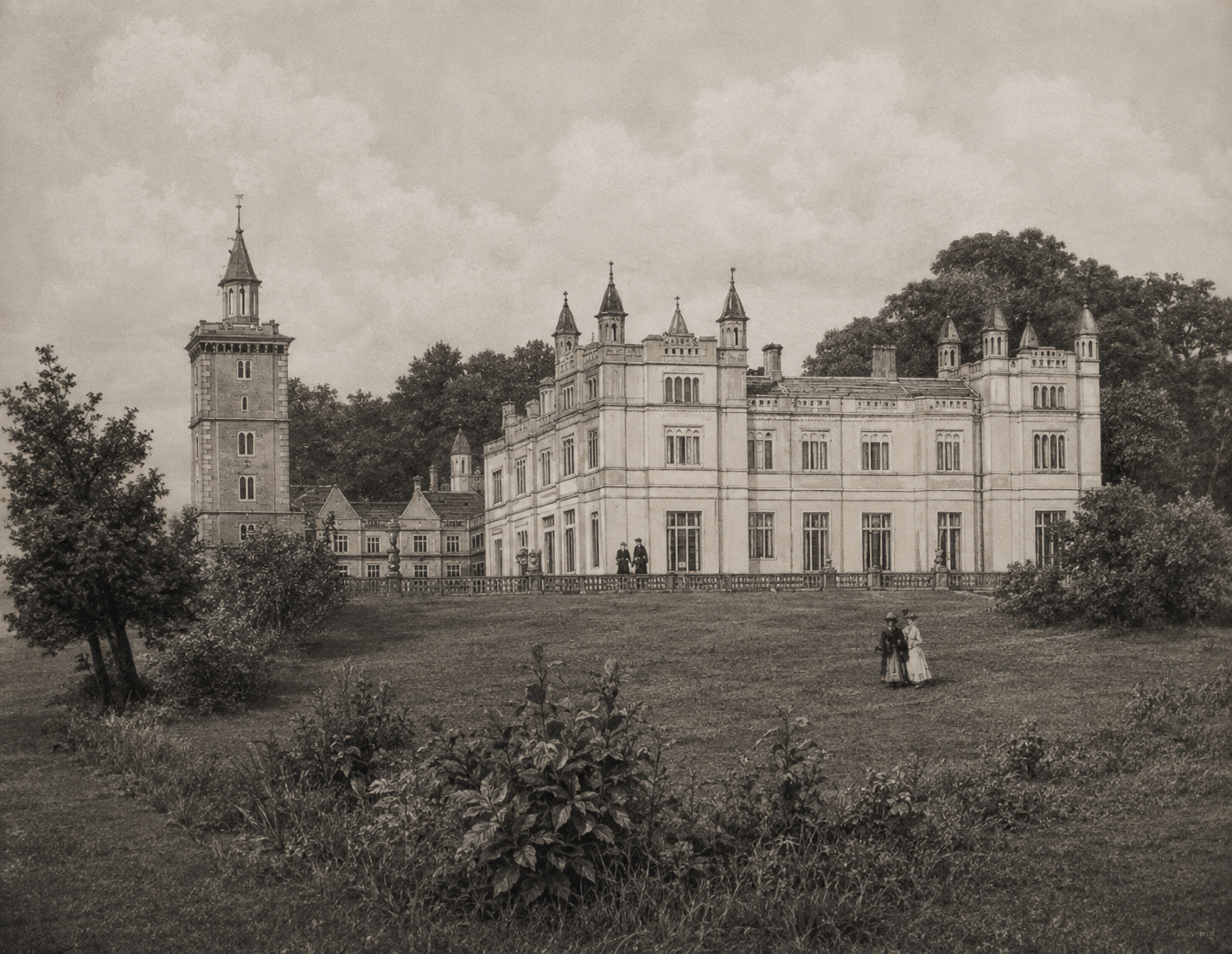
The former Drayton Manor stood at Drayton Bassett and was once connected with the Peel family. The house was demolished in the late 1920s, although the wider site would later become associated with leisure use and what is now Drayton Manor Resort.
For Family Tree, however, the story of lost country houses is about far more than grand architecture or aristocratic families. Country houses were also significant places of employment.
Domestic servants, gardeners, cooks, grooms, stable hands, carpenters, builders, estate workers and local suppliers could all find their livelihoods connected to these estates. The houses and the families who occupied them also influenced surrounding roads, parks, farmland, trades, housing and communities.
For people tracing their family history today, understanding those connections can provide an important piece of the puzzle. Knowing that an ancestor worked on a particular estate, supplied goods to a country house or lived within a community shaped by one can add valuable context to a family story.

Drayton Manor, FazeleyDrayton Manor was the home of the Peel family and was built by Sir Robert Peel's father in about 1790. This house was demolished in 1830 and the new house shown here was completed in 1833, designed by ...View Full Resource on Staffordshire Past Track
Putting people back into Staffordshire’s history
Helen Tovey, Editor of Family Tree, said:
“Drayton Manor is exactly the kind of place that shows why lost country houses still matter.
“It was not just a grand home. It was a workplace, a local landmark and part of Staffordshire’s story.
“Behind houses like Drayton Manor were servants, gardeners, cooks, tenant workers, estate staff, local suppliers and families whose lives were tied to those places.
“When a house like that disappears, we lose more than architecture. We lose part of the local context that helps people understand where their families worked, lived and belonged.
“That is why family history is not just names and dates. It is about putting people back into the places, jobs and communities that shaped their lives.”
The Staffordshire research forms part of wider work by Family Tree examining Britain’s lost country houses and what disappeared alongside them.
Country house historian Matthew Beckett puts the number of lost country houses across the UK at 3,054, with more than 2,000 recorded in England alone.
At the same time, surviving historic houses continue to make a considerable economic contribution.
Historic England records that Historic Houses represents 1,450 independently owned historic houses, castles and gardens across the UK.
In 2022, those places generated £1.3 billion for the UK economy, supported more than 32,500 full time equivalent jobs, hosted 26,000 cultural events, appeared in 4,100 days of filming and spent more than £156 million on repairs and maintenance.

Drayton Bassett - 'Drayton Manor': sepia drawing'Drayton House, Staffordshire, the Seat of the Right Hon[orable] Sir Robert Peel, Bart., M.P.' Showing an Elizabethan style mansion. Built on the site of an earlier Manor House, which was demolished, ...View Full Resource on Staffordshire Past Track
How the £44.9 million figure was calculated
Family Tree used the £1.3 billion contribution from 1,450 historic properties as a benchmark.
Dividing that figure across the represented properties produces an average contribution of approximately £897,000 per site each year.
Applied to the 50 named lost country houses identified in Staffordshire, that produces a potential annual heritage economy value of around £44.9 million.
Using an approximate assumption that two thirds of spending would remain within the local economy gives a possible Staffordshire economic value of around £29.9 million each year.
The figure is intended as an illustration rather than a formal valuation.
Not every lost Staffordshire country house would necessarily have developed into a visitor attraction, hotel, wedding venue, filming location or events space.
Instead, Family Tree says the calculation provides a sense of the potential economic and local history value that disappeared alongside these buildings.

Family Tree Live coming to Staffordshire
The analysis comes ahead of Family Tree Live, which will take place at Statfold Country Park near Tamworth on 22 and 23 May 2027.
The two day family history event is organised by Family Tree, part of Warners Group Publications, and sponsored by Ancestry.
Visitors can find out more through the Family Tree Live website.
Where: Statfold Country Park, near Tamworth
When: 22 and 23 May 2027
Join The Staffordshire Signal on WhatsApp
Never miss a single breaking update, local news story, community event, or deep dive. See everything happening in Staffordshire first, straight to your phone!
Get Instant UpdatesSupport local journalism
Help us grow the Signal
Every tip goes towards expanding what we cover, more reporters, more events, more of Staffordshire's stories told properly. If this was worth reading, help us do more of it.
Every contribution supports reporting, photography, and storytelling across the county.

 The Staffordshire Signal Weekly: Historic England's Spode Works concerns, Stoke's city status protected, and our first Signal TV documentary
 School Streets scheme extended around Sandon Primary Academy in Meir
 Stoke-on-Trent's city status to be protected as councils prepare for shake-up
 New vision could transform the future of Chatterley Whitfield
 Historic England raises concerns over Spode Works demolition plans