One of Stoke-on-Trent's most recognisable industrial landmarks is set to disappear. But as the city searches for new homes and new investment, could this have been an opportunity to create something far greater?
For thousands of motorists every day, the former Twyfords factory is impossible to miss.
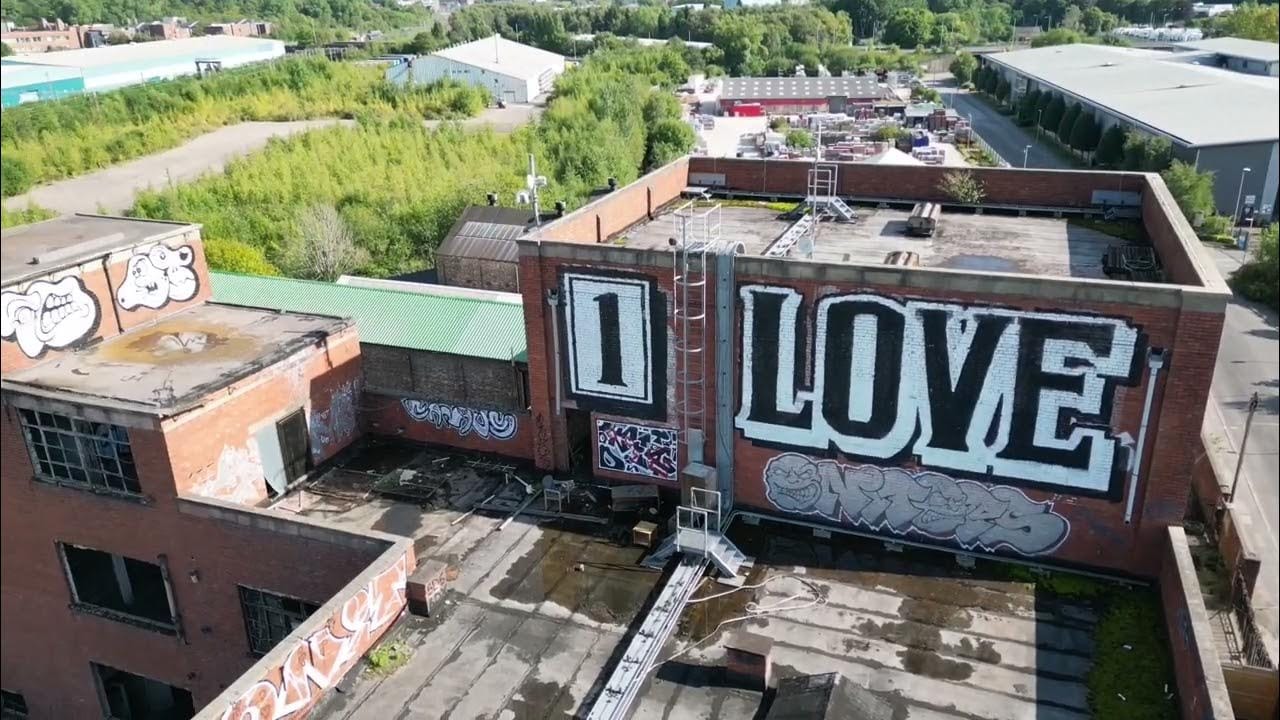
Standing prominently beside the A500 through Etruria, the vast brick complex has long been one of the first buildings people see when entering Stoke-on-Trent. Once a symbol of the city's industrial strength, it has instead become one of its most prominent reminders of decline.
Now, that chapter is set to come to an end.
Planning permission has been granted for the demolition of the remaining factory buildings after they were described as an eyesore, paving the way for the site to be cleared.
On paper, the decision is understandable. The buildings have stood empty for years, suffered extensive fire damage, been blighted by illegal waste storage and have deteriorated significantly. Safety concerns have grown while the structure has continued to decay, making redevelopment increasingly difficult.
But the prospect of demolition brings a sense of disappointment to me. Looking at the scale, character and history of the site, it's difficult not to wonder whether it could have become something far greater. Rather than clearing another piece of Stoke-on-Trent's industrial heritage, could this have been an opportunity to create one of the city's most ambitious residential and commercial developments yet?
But it seems Stoke-on-Trent is once again choosing the quickest solution instead of the most ambitious one.
And for anybody thinking that we should be glad to see the back of the crumbling, graffiti covered industrial mammoths, may I draw your attention to the history sitting behind it.
Twyfords traces its roots back to 1849, when Thomas Twyford began making sanitary pottery in Hanley. It was his son, Thomas William Twyford, who transformed the firm into an international name, opening a purpose built "model" factory at Cliffe Vale in 1887, considered so advanced at the time that government inspectors held it up as a pattern for factories across Staffordshire. It was here that the world's first one piece flushing toilet was developed, and Cliffe Vale went on to serve as the company's flagship works for over a century, helping cement Stoke on Trent's reputation as the global centre of ceramics and sanitaryware, before production finally wound down in 1994.
The Etruria site now facing demolition is a different, though no less storied, part of that history. Built in 1912 on land bought by Thomas William Twyford, the Garner Street works were constructed using buildings that had previously served as winter quarters for the Barnum and Bailey circus, an unusual footnote for what became one of the city's major sanitaryware factories. Like so many of the Potteries' great manufacturers, production here eventually declined, and the site was later split into smaller industrial units.
It was this building that suffered a devastating fire on 28th December 2012, after which the site became notorious for the illegal stockpiling of combustible waste.
The Environment Agency eventually stepped in after years of enforcement action, with tens of thousands of tonnes of waste having to be removed before the site could even begin to move forward. For former Stoke Central MP Jo Gideon, the site resulted in countless hours of casework and campaigning before any kind of outcome was achieved.
Few would argue the site, in its current condition, can remain as it is.
Yet around the country there are growing examples of historic industrial buildings being transformed rather than erased entirely.
Perhaps the most obvious comparison is Capital&Centric's work in Manchester, where former mills, warehouses and factories have been converted into thriving mixed-use neighbourhoods combining apartments, business units, cafés and public spaces.
Closer to home, the developer has recently delivered the Goods Yard site, which started out as a three-storey warehouse, craning goods between the train line and canal with a vaulted basement below. Now, it includes 174 rental homes, 30,000 sq ft of workspace, independent bars, eateries, coffee shops and a lush, green public square.
Projects like these prove that regeneration does not always have to begin with a clean slate.
They show that heritage can become an asset rather than an obstacle.
The Twyfords site occupies a strategic location within the Ceramic Valley Enterprise Zone, sitting beside one of the city's busiest transport corridors and only minutes from Festival Park, Hanley and Stoke railway station.
With Stoke-on-Trent facing continued pressure to deliver more housing while also seeking to revitalise brownfield land, it is difficult not to imagine what the site could have become.
A carefully restored complex could have delivered hundreds of apartments alongside flexible commercial space for start-up businesses, creative industries, cafés and independent retailers - creating a neighbourhood that celebrated Stoke's industrial identity rather than replacing it.
Of course, restoration comes with significant cost.
Years of neglect, fire damage and illegal dumping have left the buildings in an exceptionally poor condition, and those challenges may ultimately have made demolition unavoidable.
But the conversation remains an important one.
Too often, regeneration is framed as a choice between preserving heritage or delivering new development.
The best schemes prove those two ambitions are not mutually exclusive.
As the diggers eventually arrive at Twyfords, another landmark of Stoke's industrial story will disappear from the skyline.
Whether demolition is the right decision or an unavoidable necessity will continue to divide opinion. But perhaps the bigger question is whether the city can become bolder in recognising the potential hidden within its remaining industrial heritage before more of it is lost forever.
I will continue to report on and cover in-depth Staffordshire’s regeneration, and the city's response to its ongoing heritage emergency.
Enjoyed this story?
The Staffordshire Signal is a not-for-profit, community-funded publication. Every tip helps keep local journalism free, independent, and focused on the stories that matter across Staffordshire.
Every contribution supports reporting, photography, and storytelling across the county.
Join The Staffordshire Signal on WhatsApp
Never miss a single breaking update, local news story, community event, or deep dive. See everything happening in Staffordshire first, straight to your phone!
Get Instant Updates

 Sean Massey wins Himley & Swindon by-election for the Conservatives
 Zanzibar development moves forward in creating 62 new homes
 The Staffordshire Signal Weekly: deliberate fires at Park Hall, ten councils become two, and Sir David Jason heads to the Regent
 Tunstall Clock Tower restored as council steps up action to protect historic landmarks
 Charity sees unprecedented demand for Youth Holiday Activities