

Scientists led by Keele University are beginning a major research project examining bacterial plant diseases already affecting crops in parts of Europe, with the aim of helping protect UK food security before the diseases become established here.
What’s new: Keele University is leading a major new research project investigating bacterial plant diseases spreading across continental Europe.
Why it matters: The diseases can affect potatoes, sugar beet, carrots and grapevines, while the planthoppers capable of spreading them are already present in the UK.
By the numbers: The project is one of 18 research and innovation projects receiving a share of more than £54 million in public investment.
Scientists are launching a major new research project to help protect UK food security from bacterial plant diseases that are spreading across parts of continental Europe.
The joint government and UK Research and Innovation (UKRI)-funded project, led by Keele University, will help farmers and growers prepare for potential future outbreaks before the diseases become established in the UK.
The diseases are spread by sap-feeding insects known as planthoppers and are already affecting crops in parts of Europe, causing reductions in yields and quality. While the planthopper species involved are present in the UK, the diseases themselves are not currently believed to be established here. Researchers say this provides an opportunity to improve preparedness and reduce future risks.
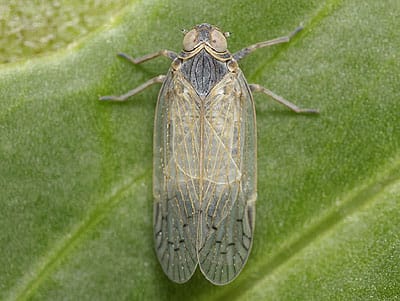
The project brings together experts from eight leading research organisations, to investigate emerging bacterial diseases that threaten economically important crops, including potatoes, sugar beet, carrots and grapevines.
Led by Professor James Bell of Keele University, the consortium includes researchers from the Animal and Plant Health Agency (APHA), Fera Science, Rothamsted Research, and the Universities of Exeter, Gloucestershire, Warwick and York.
Researchers will examine a disease system involving two species of planthopper that can transmit five bacterial diseases between crops and wild plant hosts. The project will explore the biological, ecological, economic and social dimensions of these emerging threats and develop new tools to improve understanding, monitoring and risk assessment.
Professor James Bell, project lead and Professor of Entomology at Keele University, said:
“Novel combined bacterial plant infections are rapidly spreading across Europe. These complex plant diseases are compromising grapevine, sugar beet, potato and carrot crops on the continent but are currently thought to be absent from the UK.
“We have an opportunity to prepare for this potential epidemic threat by developing tools and methodologies to better understand both the insect vector - a planthopper - and the disease complex it carries.
“We have assembled an expert team spanning the agricultural, biological, ecological, economic, mathematical, statistical and social sciences. Together, we will address critical knowledge gaps and develop the evidence needed to help mitigate these bacterial infectious diseases, strengthening the UK’s food security.”
The project will engage with Defra to support plant health policy development and risk assessment.
Dr Trisna Tungadi, co-project lead and lecturer in Plant Health at Keele University, said:
“The significance of this project is that insect-vectored bacterial plant diseases are much less well understood than insect-vectored viral diseases.
“Planthoppers, which can transmit these bacterial pathogens, are already present in the UK, so this project gives us an important opportunity to better understand the potential risks and ensure we are prepared for these emerging disease threats.”
The consortium will generate new scientific knowledge and practical tools to help farmers, growers, industry stakeholders and policymakers respond to emerging plant health threats before they become established in the UK.
The project is one of 18 new research and innovation projects receiving a share of more than £54 million in public investment. The investment is coordinated through UK Research and Innovation (UKRI), with co-funding from partners including the Department for Environment, Food and Rural Affairs (Defra), the Foreign, Commonwealth and Development Office (FCDO), and the Department for Health and Social Care (DHSC).
Join The Staffordshire Signal on WhatsApp
Never miss a single breaking update, local news story, community event, or deep dive. See everything happening in Staffordshire first, straight to your phone!
Get Instant Updates
 Newcastle-under-Lyme poetry competition launches for National Poetry Day
 Keele University Student Wins Three Bodybuilding Titles in First Seven Competitions
 Keele University Launches New Advanced Materials Research Centre
 Tamworth Housebuilder Launches ‘Archi-Tot’ Competition to Design Homes of 2126
 Swan Lake comes to the Gatehouse this November