
As councillors prepare to vote on ending the borough's climate emergency declaration, we examine the potential outcomes before the Full Council meeting
Six years ago, Newcastle-under-Lyme Borough Council joined hundreds of local authorities across the country in declaring a climate emergency.
The motion, passed in April 2019, committed the council to becoming carbon neutral by 2030 and placed climate change at the heart of its long-term decision making.
On Wednesday evening, that commitment is expected to come to an end.
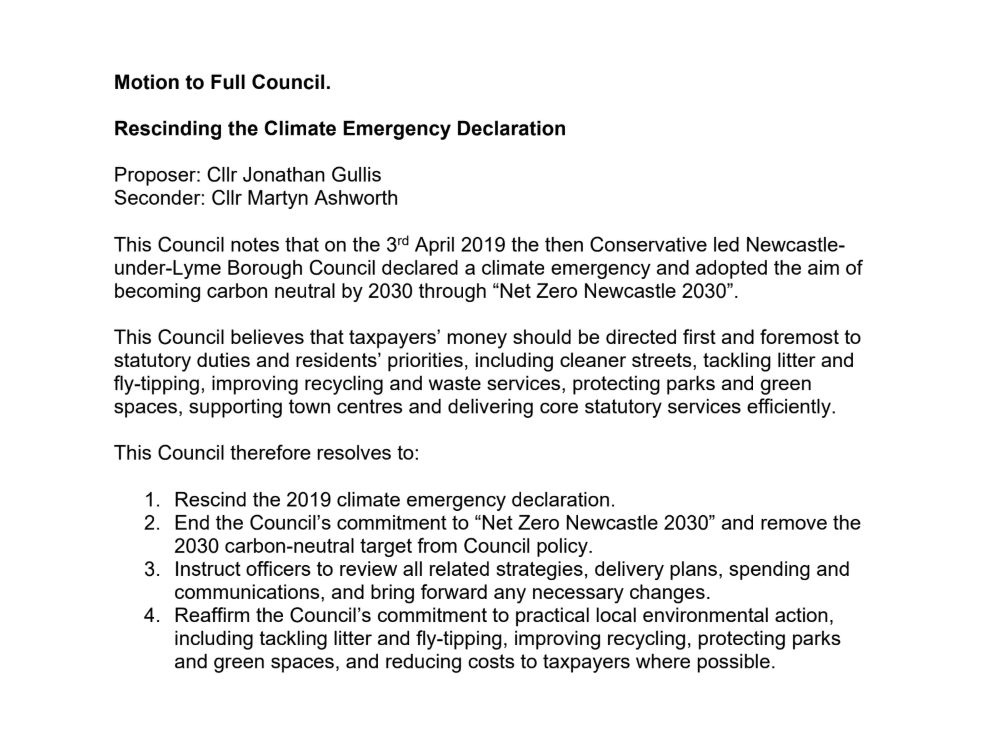
At a meeting of Full Council, councillors will debate a motion proposed by Council Leader Cllr Jonathan Gullis to formally rescind the borough's 2019 Climate Emergency declaration and remove the authority's commitment to achieving Net Zero by 2030.
If approved, officers will be instructed to review all associated strategies, delivery plans, spending and communications, while the council says it will instead focus on what it describes as "practical local environmental action", including tackling litter and fly-tipping, improving recycling, protecting parks and green spaces and reducing costs to taxpayers where possible.
The proposal is one of the clearest examples yet of the new Reform UK administration putting its political philosophy into practice.
Throughout recent weeks, Cllr Gullis has argued that the climate emergency declaration amounted to "virtue signalling" and that local government should prioritise delivering core public services over pursuing ambitious carbon reduction targets.
He went on to say:
“The move to achieve Net Zero has become the worst kind of ‘groupthink’; often expensive and detached from reality while we pay more at home and at work for decisions that make no meaningful difference.
Newcastle-under-Lyme Borough Council should be focused on clean streets, safer communities, better services and value for money, not gimmicks. That is why every pound of spending linked to Net Zero is now under review. Where money has not been spent or legally committed, we will look to stop it, save it, or reprioritise it for the things residents actually care about.“
But opponents argue the decision risks confusing two separate issues.
North Staffordshire Green Party has been among the most vocal critics of the proposal, rejecting suggestions that climate science is driven by ideology.
In a statement shared with The Staffordshire Signal, the party said:
"Science is not virtue signalling. The data on man-made climate change goes back to the 1950s. Scientists from different countries, using different instruments, often working entirely separately have all come to the same conclusions."
The party also disputed claims that climate policies are poor value for money, arguing that delaying investment could ultimately increase costs for residents.
"Net zero and climate action is about value for money. Net zero cuts operating costs at a council level over time and while scrapping targets may look cheaper in the short term, it shifts the higher costs for adapting to a changing climate through inefficient buildings and higher energy use later. This costs taxpayers, the voters and residents of Newcastle-under-Lyme, more."
Looking ahead, the Greens say they intend to continue campaigning for stronger action on climate change while encouraging residents to play their own part.
"The people of the Borough must do all they can to keep up pressure on the council... We must all take steps to be informed... The main thing we can do is keep pressuring those people who are meant to represent us."
Whatever happens at Wednesday's meeting, the debate is unlikely to end there.
Rescinding the declaration would remove the borough's most significant environmental commitment, but it would not remove the council's wider legal responsibilities around environmental protection, planning policy or biodiversity. Nor would it prevent future administrations from adopting new climate targets should political priorities change.
In many ways, Wednesday's vote reflects a broader debate about the role of local government, and over how councils should spend public money. Council data published before the change in administration shows that Newcastle-under-Lyme Borough Council had reduced its operational carbon emissions by more than 68% since 2009/10, with many of those reductions coming from measures such as LED lighting, improved insulation, more efficient council buildings and changes to the council's vehicle fleet. The authority has argued these projects not only reduced emissions but also cut energy consumption and operating costs over time. The new administration, however, argues that some of the remaining Net Zero projects - such as replacing refuse collection vehicles with electric alternatives - would require significant upfront investment and that those funds would be better directed towards delivery of local services. Ultimately, the new administration are not entirely questioning the existence of climate change, but about whether potential long-term operational savings justify higher costs in the short term.
So, should councils set ambitious long-term objectives on issues such as climate change, even where much of the action required lies beyond their direct control? Or should they concentrate exclusively on delivering day-to-day services and leave wider national challenges to Westminster?
Those are fundamentally political questions, and councillors will each reach their own conclusions before voting on Wednesday.
What is certain however is that Wednesday's decision will mark a significant shift in the direction of Newcastle-under-Lyme Borough Council. Whether residents judge it to be a return to practical governance, or the abandonment of a vital environmental commitment, will depend not only on how councillors vote, but on what replaces the declaration once it is gone.
I will be following up on this story once the full council meeting concludes and the votes are recorded. If you would like to watch online, click here.
Enjoyed this story?
The Staffordshire Signal is a not-for-profit, community-funded publication. Every tip helps keep local journalism free, independent, and focused on the stories that matter across Staffordshire.
Every contribution supports reporting, photography, and storytelling across the county.
Join The Staffordshire Signal on WhatsApp
Never miss a single breaking update, local news story, community event, or deep dive. See everything happening in Staffordshire first, straight to your phone!
Get Instant Updates

 Open Day to Launch First Veteran-Owned Mobile Knife Amnesty Van
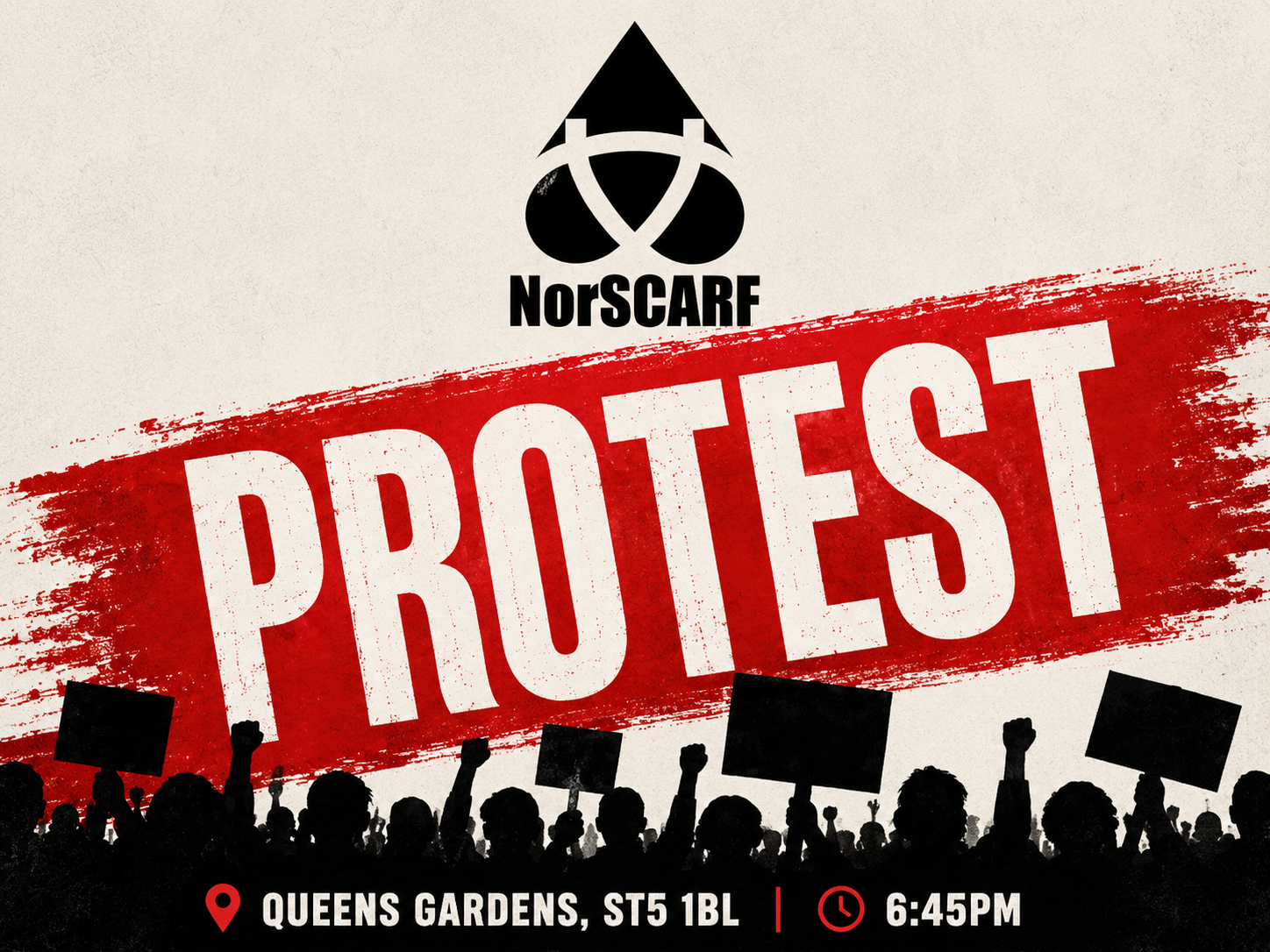 Protest Planned Outside Newcastle-under-Lyme Borough Council Over Reform UK Policies
 Public get chance to comment on proposed face covering ban in Stafford
 Star-Studded Birthday Bash Honours Employees Past and Present
 Open day to Launch First Veteran Owned Mobile Knife Amnesty Van