Fortnum & Mason proudly champions Stoke-on-Trent pottery. Jenna Goodwin asks why Stokies do not always value their ceramic heritage in the same way.
Fortnum & Mason has championed Stoke-on-Trent pottery for a century. So why do people elsewhere often appear to value our ceramics more than Stokies do?
What’s new: Fortnum & Mason has supported Stoke-on-Trent’s ceramics industry for more than a century and continues to stock locally made pottery.
Why it matters: Historic manufacturers face pressure from high energy costs and cheaper imports, making local support increasingly important.
Worth knowing: Ceramics made in Stoke-on-Trent can command premium prices in London, while their craftsmanship and value are sometimes overlooked closer to home.
Photos by Jenna Goodwin
A Tale of Two Cities
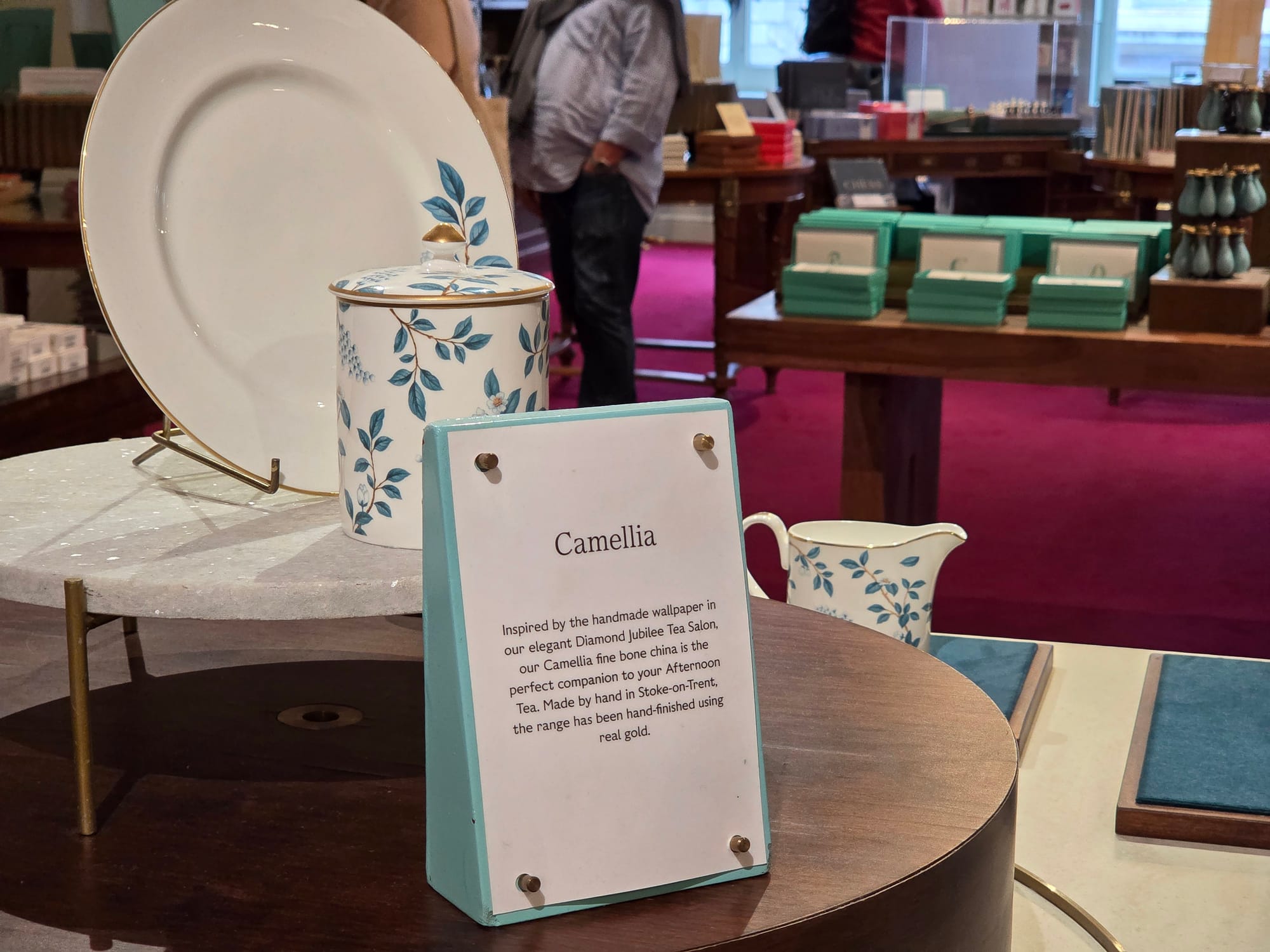
There's a small display of mugs on a marble topped table in Piccadilly, London, under a sign that just says Camellia. The card next to it explains that the range takes its cue from the handmade wallpaper in the Diamond Jubilee Tea Salon upstairs, that it's made by hand in Stoke-on-Trent, and that it's finished with real gold. Fortnum and Mason, a shop that has been supplying tea, marmalade and Scotch eggs to half the British Empire since 1707, wants every last person who walks past that table to know exactly where their crockery came from.
Ask most people in Hanley, Longton or Burslem where their plates came from and you'll get a shrug, a vague nod towards a factory shop, or nothing at all. We live in the city that taught the rest of the world how to make a decent cup and saucer, and a lot of us treat that like trivia rather than a birthright. One hundred and fifty miles south, meanwhile, in a shop that could charge whatever it fancied for whatever it fancied, the buyers are stood in the china department watching pottery lovers turn plates by hand, calling it, with a completely straight face, very cool.
None of that adds up. So let's work out why.
We're going to look at what Fortnum's actually sells, and what it costs. We're going to look at why a Spode plate or a bit of Duchess China gets treated with a reverence in London that we'd barely give a garden ornament here. And then, because The Staffordshire Signal exists to champion this city rather than just report on it, we're going to make the case for why that needs to change, and what you can actually do about it before another factory shuts its doors for good.
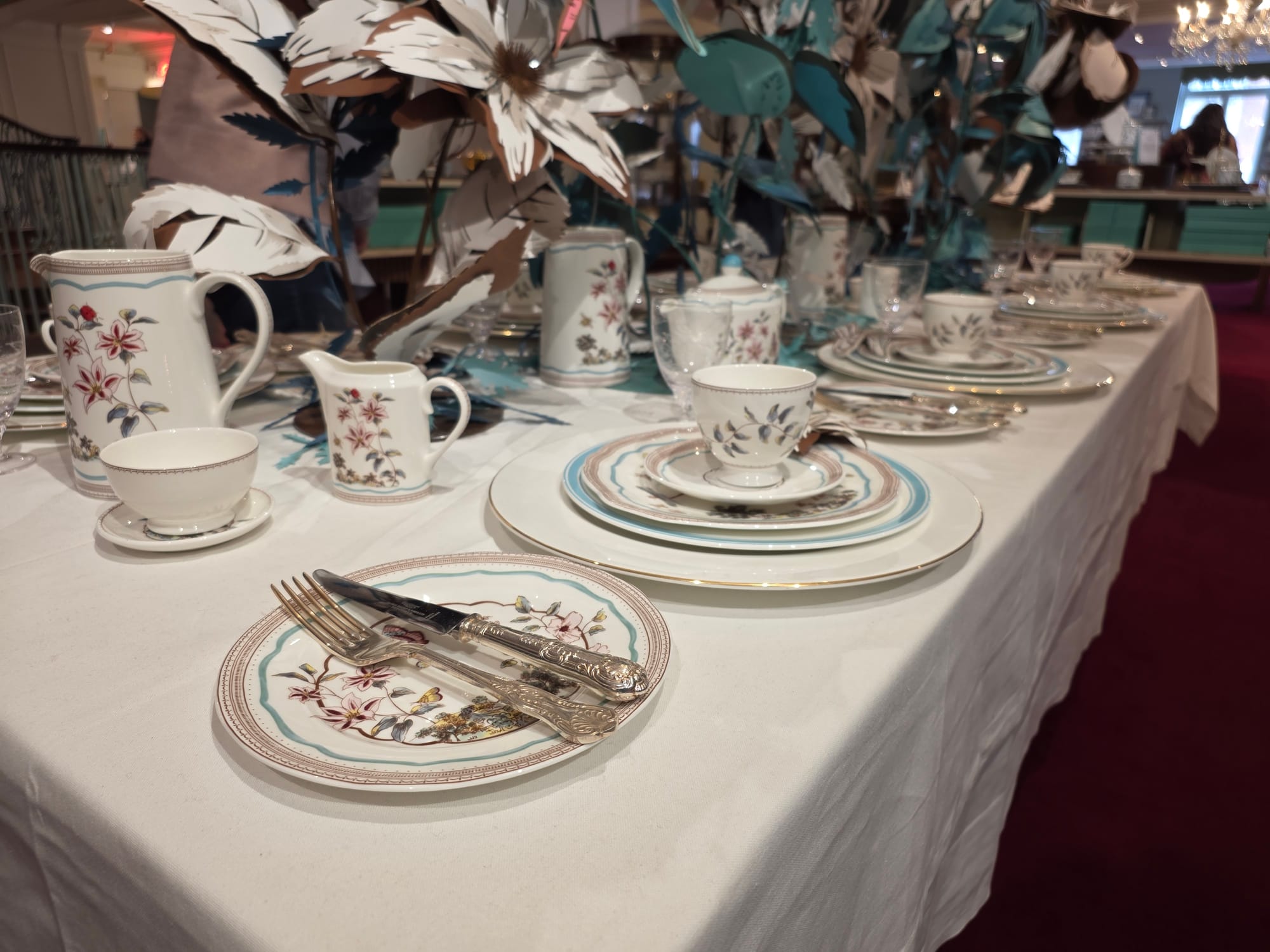
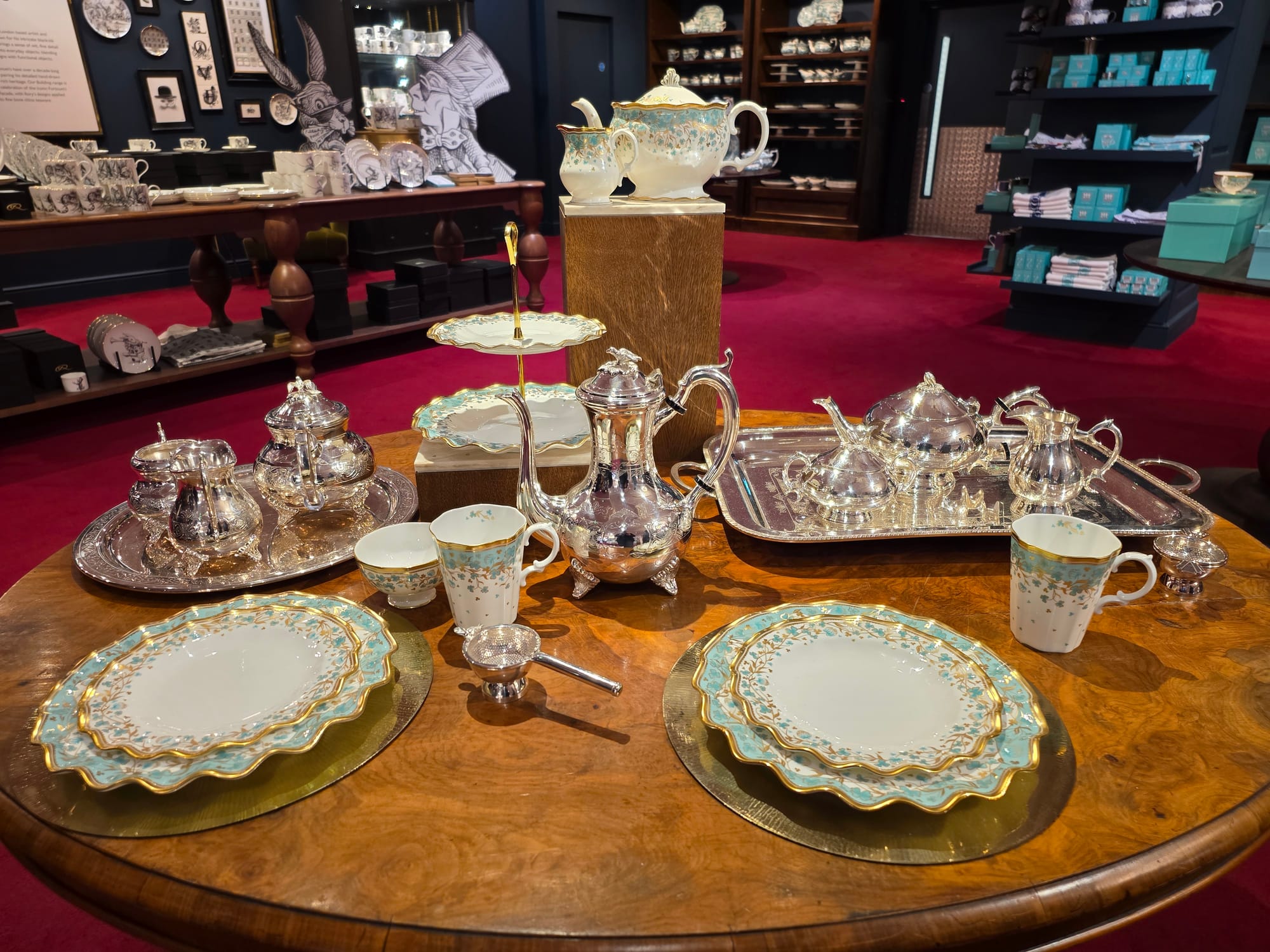
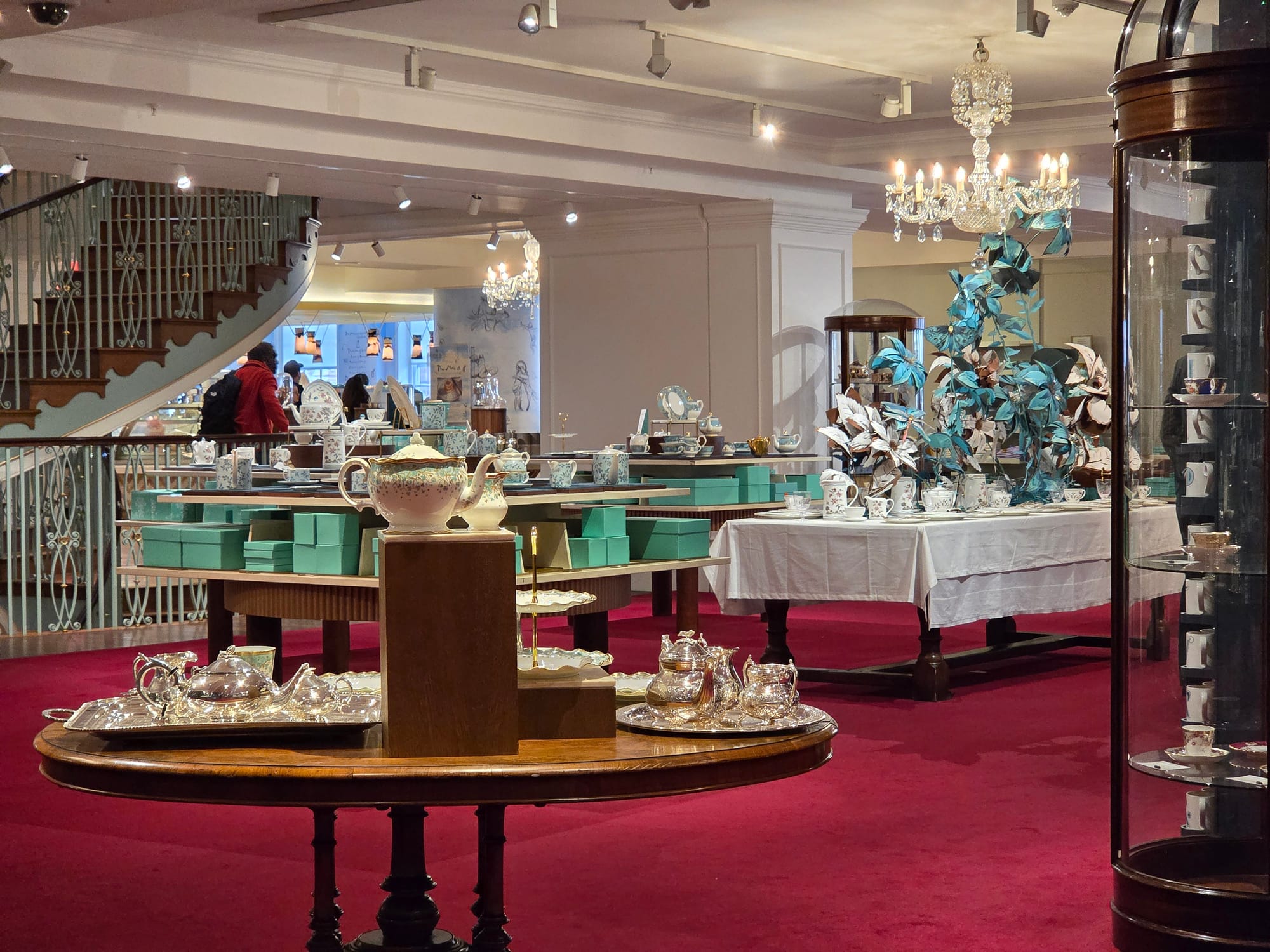
Photos by Jenna Goodwin
A Century of Quiet Loyalty
Fortnum's didn't just discover us last week. In June 2025, the store's Director of Buying, Jo Newton, gave an interview and put an actual date on it. In the 1920s they started purchasing from brands like Spode and then doing collaborations, and they have supported Stoke's ceramics industry for the last 100 years. A full century of one of the most recognisable shops in the world quietly choosing, over and over, to fill its shelves with pottery from this city.
She didn't stop there, either. It's a very cool industry with the craftsmanship and the diversity, she said. We feel very passionate about it. When it comes down to ceramics there's pretty much only one area that does it with gravitas. She talked about standing in the china department watching staff literally turn plates, and made a public commitment to keep buying from Stoke for at least another decade, despite what has been a brutal few years for the industry, energy costs and cheap foreign imports pushing well known names, Royal Stafford among them, into liquidation.
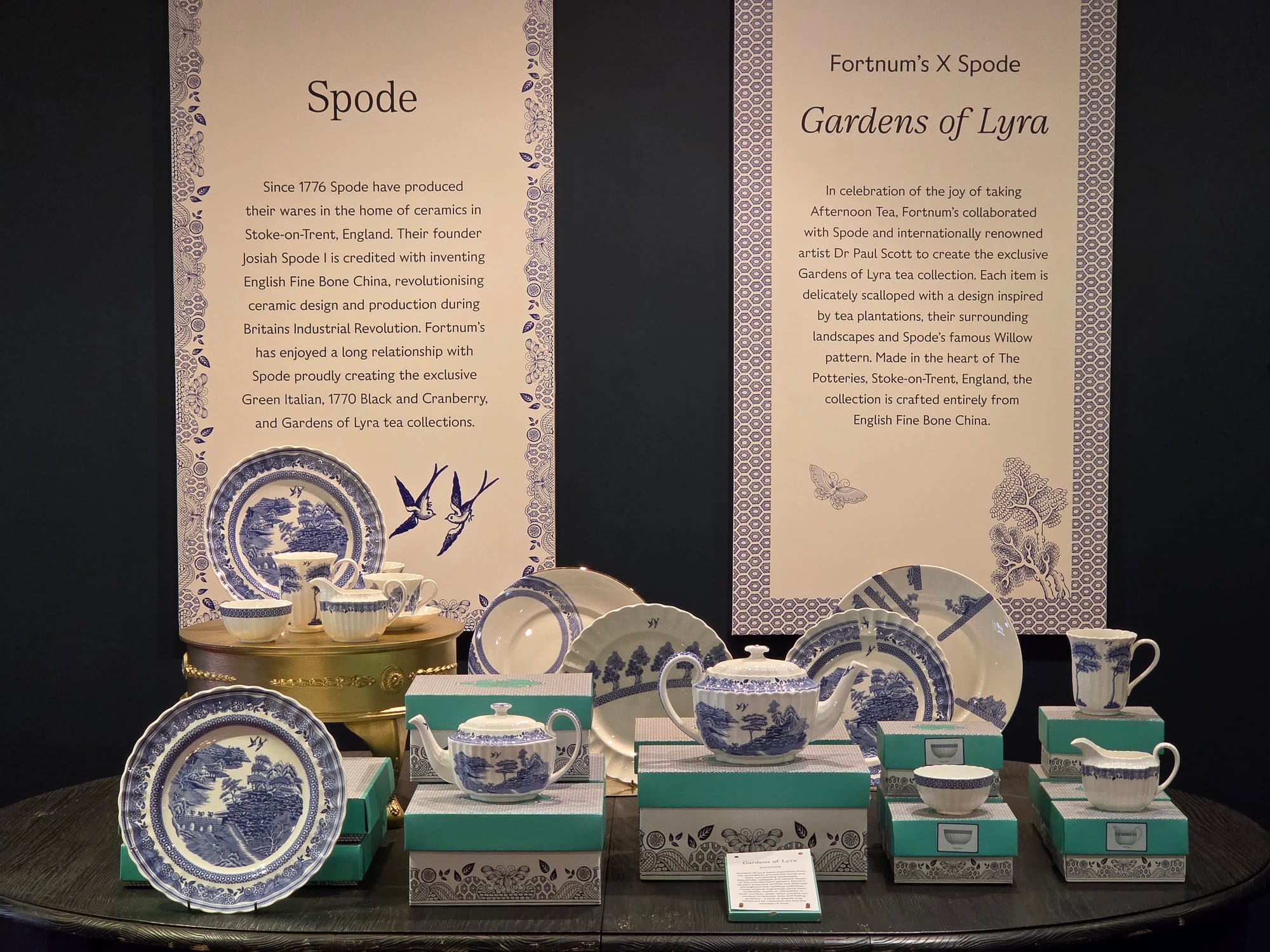
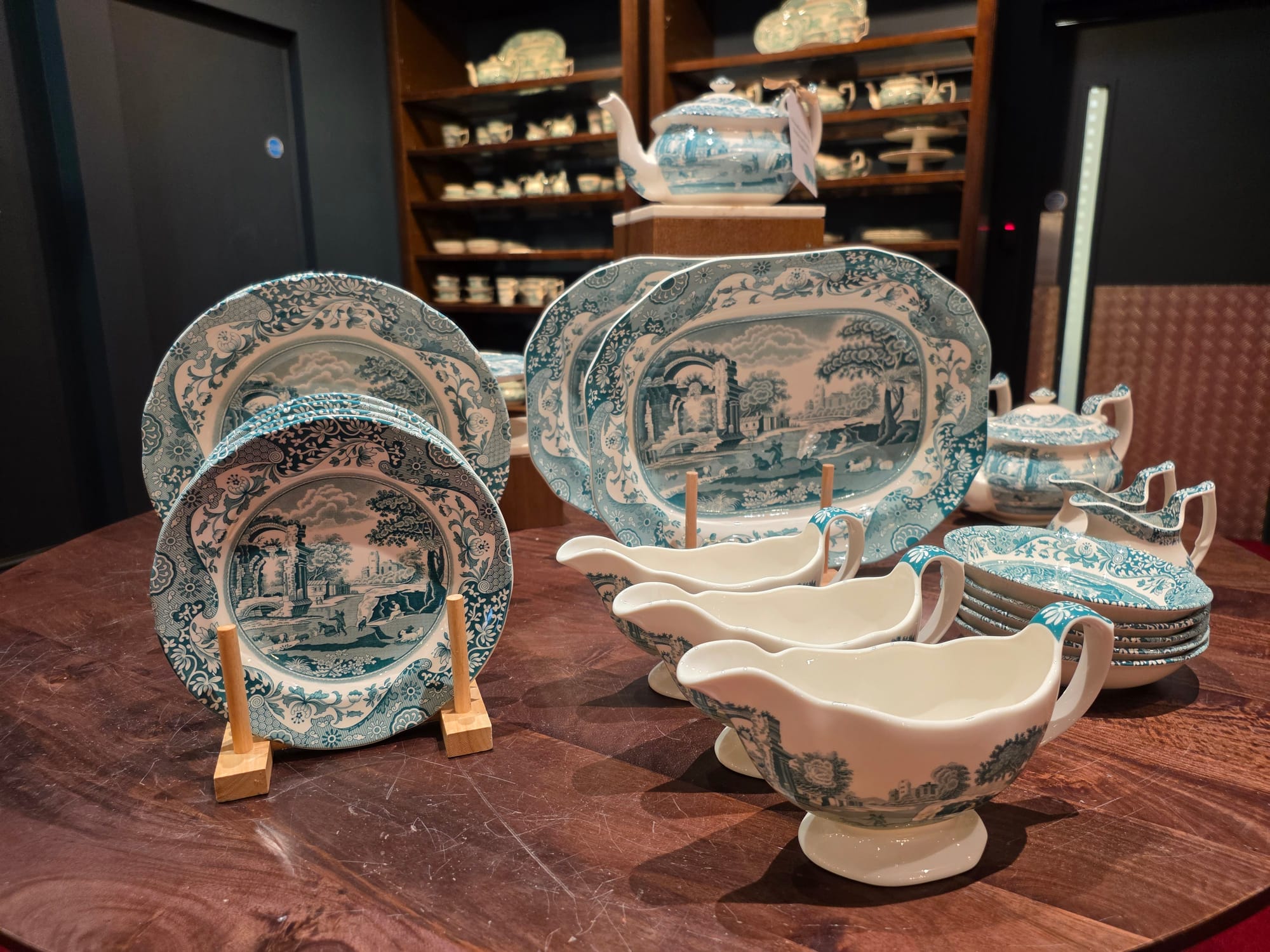
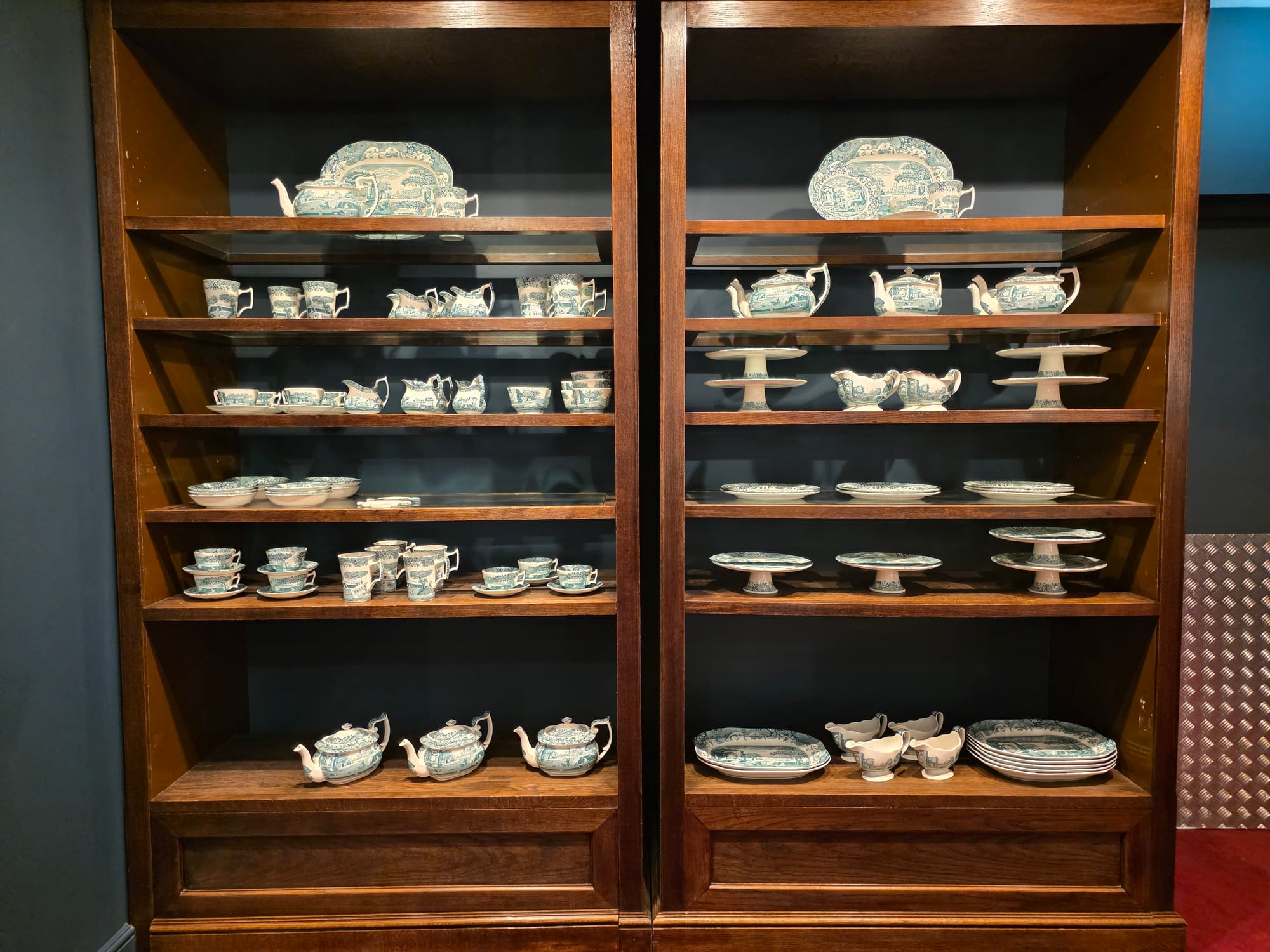
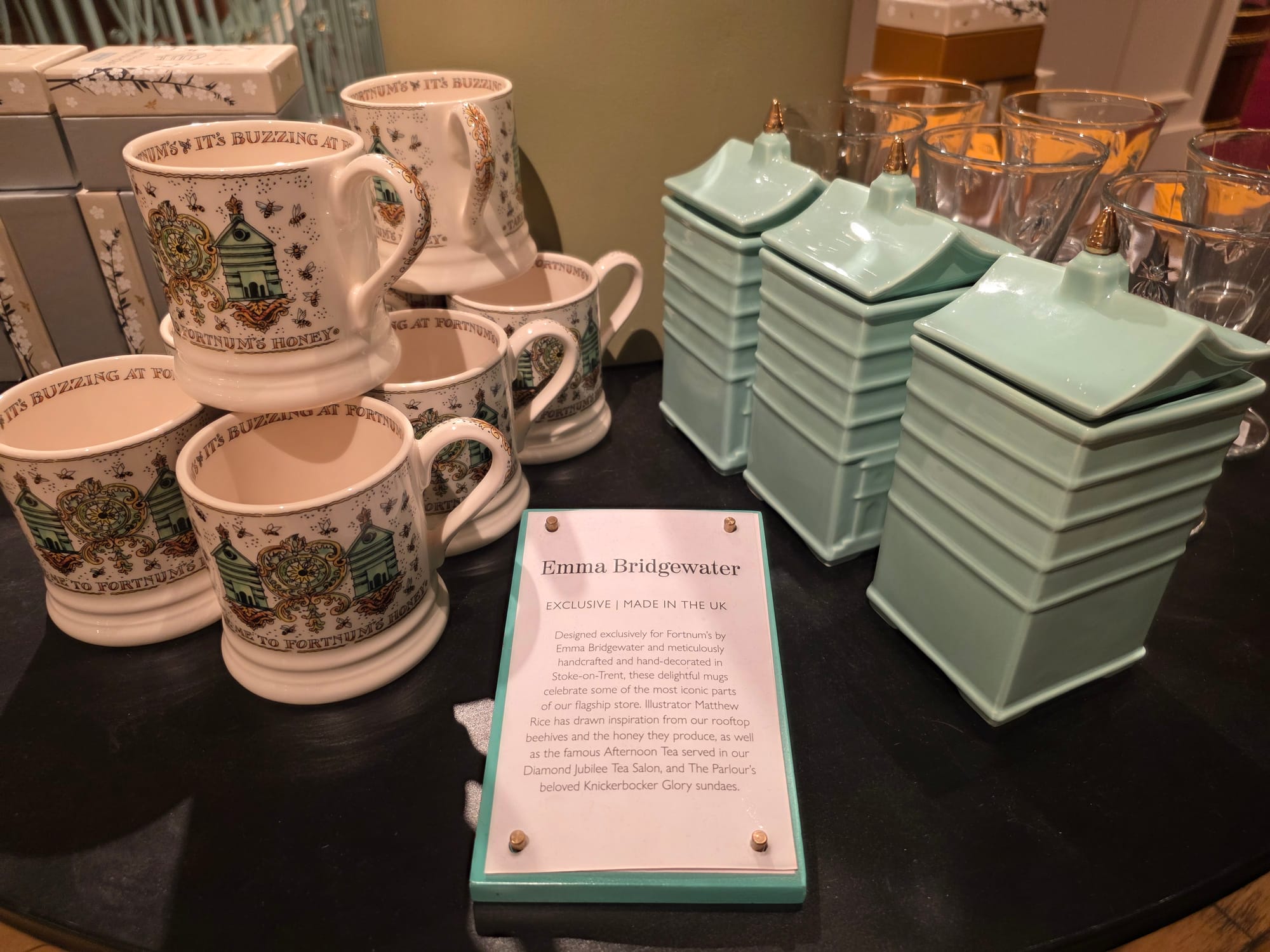
Walk the homeware floor at Fortnum's today and that loyalty isn't a marketing line, it's stock. Spode, working in Stoke-on-Trent since 1776, has an entire dedicated range, including the Green Italian collection, a reworking of Spode's famous Blue Italian pattern that Fortnum's commissioned as the brand's first collaboration of its kind, plus the Spode 1770 Italian range in cranberry and black. Emma Bridgewater, founded in 1985 and still working out of a Victorian pot bank in the city, supplies exclusive designs by Matthew Rice, each mug reportedly passing through around thirty pairs of hands before it reaches the shelf. Burleigh, working from its historic Middleport factory, hand produces Fortnum's own Provisions range of glazed earthenware.
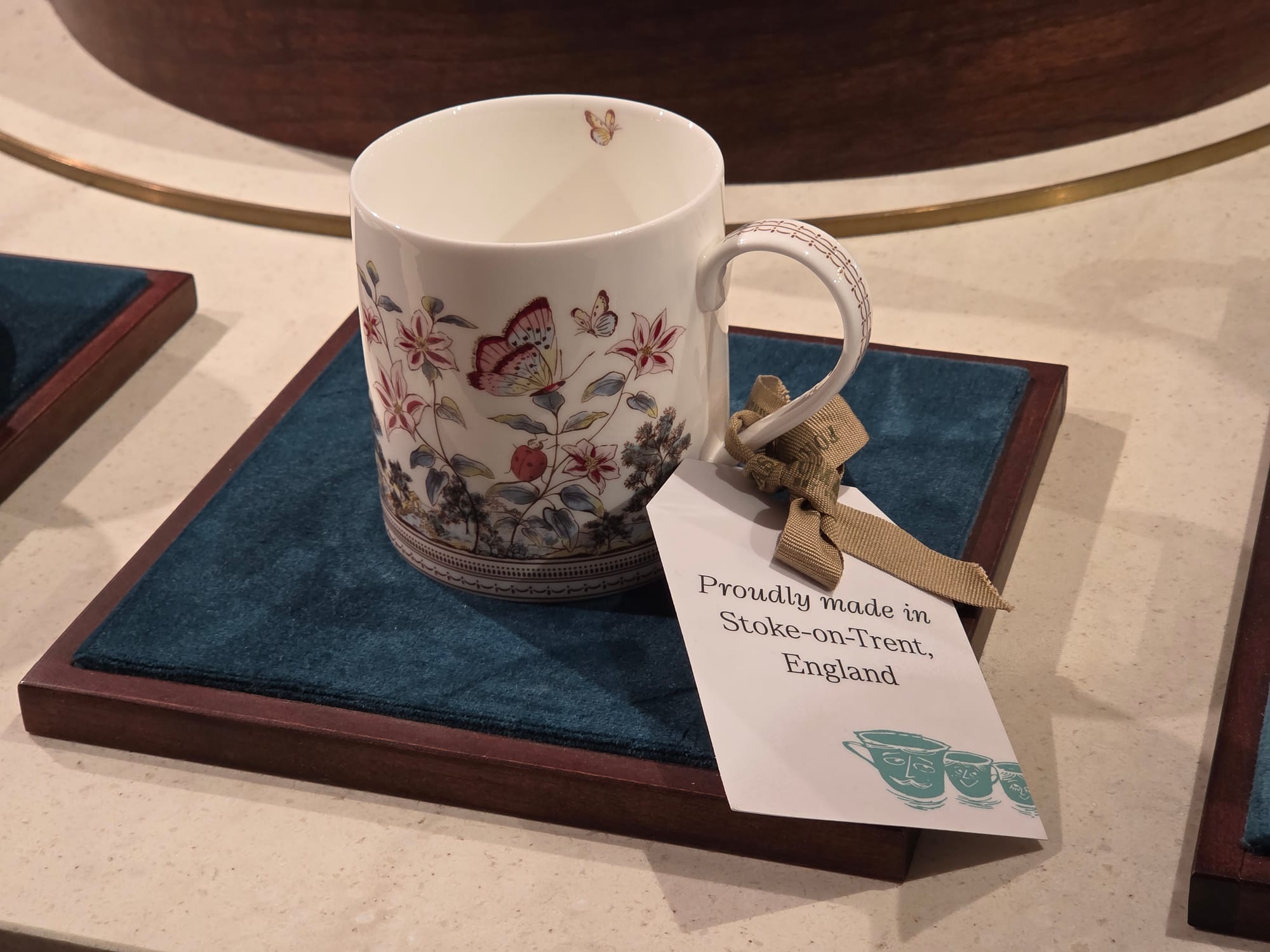
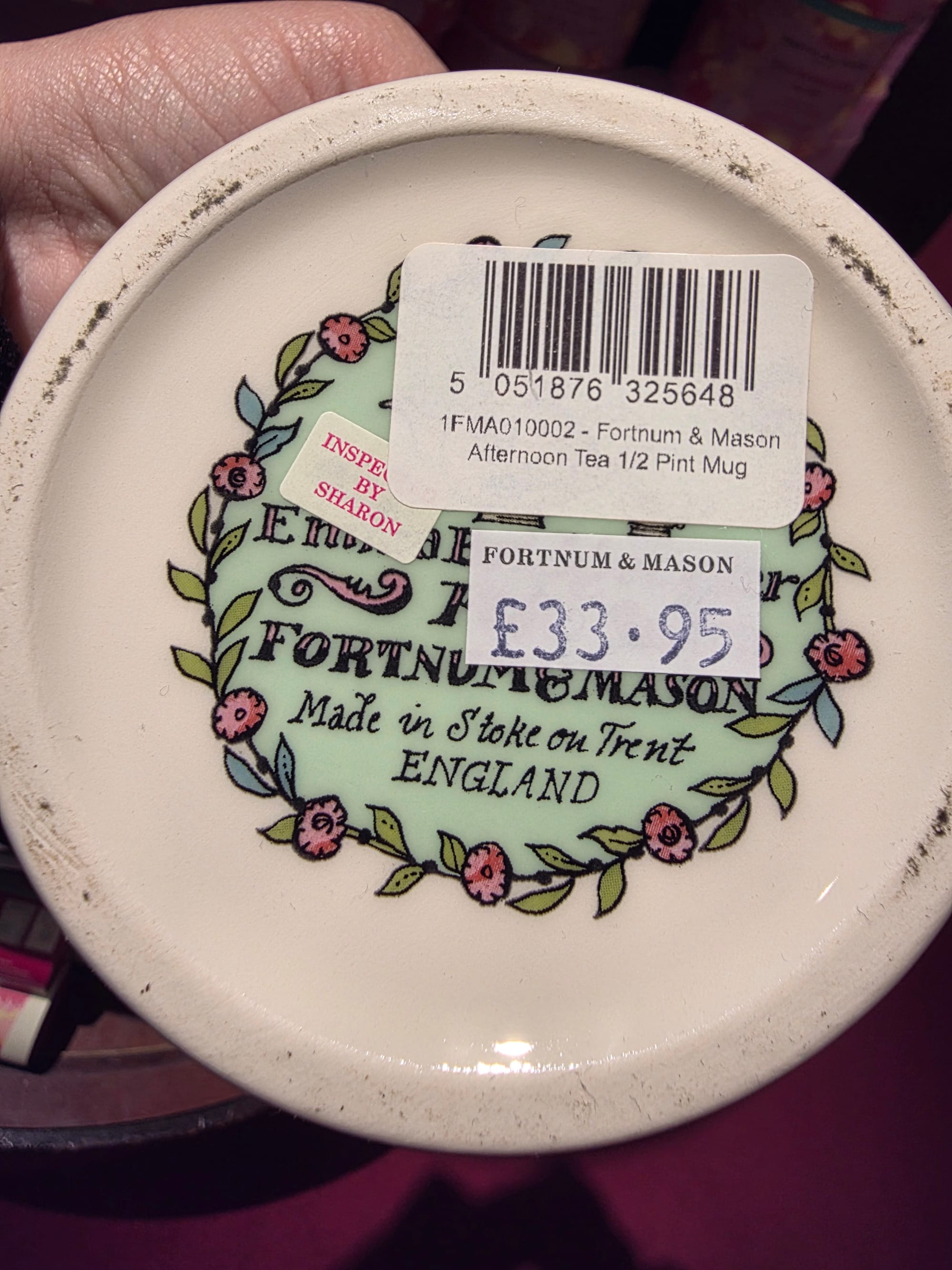
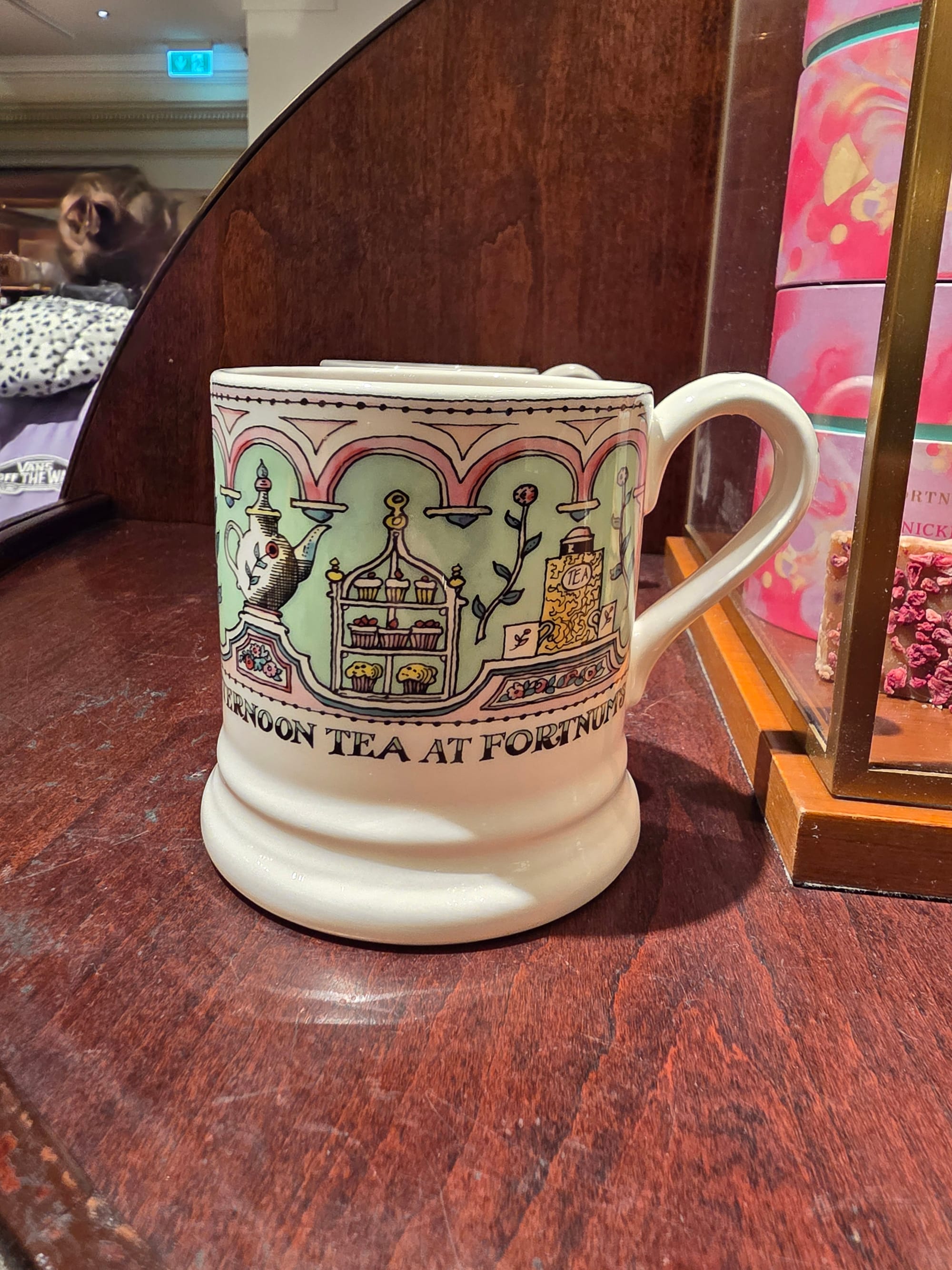
Then there's Duchess China, and this is the one that should make every Stokie sit up. Founded in Longton in 1888, Fortnum's describe it on their own website as the last historic fine bone china maker still working from its original Staffordshire factory, and say their hand painters are among the finest still practising today, keeping alive a skill once at the heart of Stoke-on-Trent. Duchess China supplies the Fortnum's Stripe and Wild Garden collections, including a mug that sells for £28.95 and carries a swing tag that says, plainly, proudly made in Stoke-on-Trent, England.
A shop in Piccadilly is putting our city's name on a price tag and expecting it to help sell the mug. Sit with that for a second.
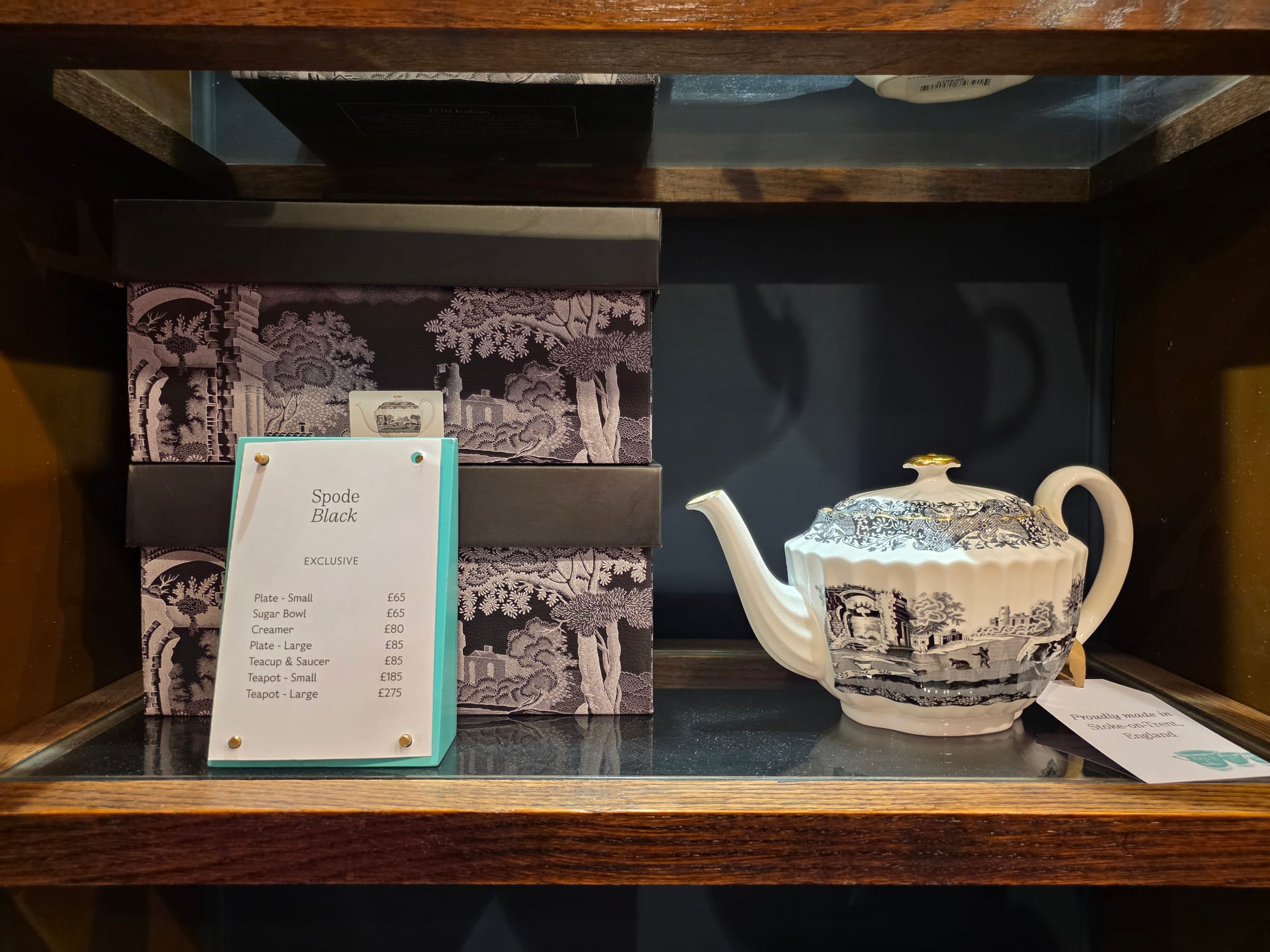
Photos by Jenna Goodwin
The Price of Distance
Here's where it starts to sting a bit. On the Fortnum's website, a single Spode Green Italian dinner plate, made exclusively for them, costs £25. The matching mug is £28, the teapot £110. A Spode 1770 Italian teapot in cranberry will set you back £275. The Duchess China Stripe mug, made by hand at that same original Longton factory, is £28.95, and that's before you've bought anything to put in it.
To be clear, we're not arguing these are unreasonable prices for hand finished, small batch, exclusively designed pieces made by skilled craftspeople. Fortnum's customers are paying for the story as much as the object, and it's a good story. What we are pointing out is that a lot of us grew up walking past factory shops selling seconds and end of lines from these same names, sometimes out of the very same factories, for a fraction of that, and quietly absorbed the lesson that this is what our pottery is worth. A few quid. A bargain. Something you grab on your way to somewhere else.
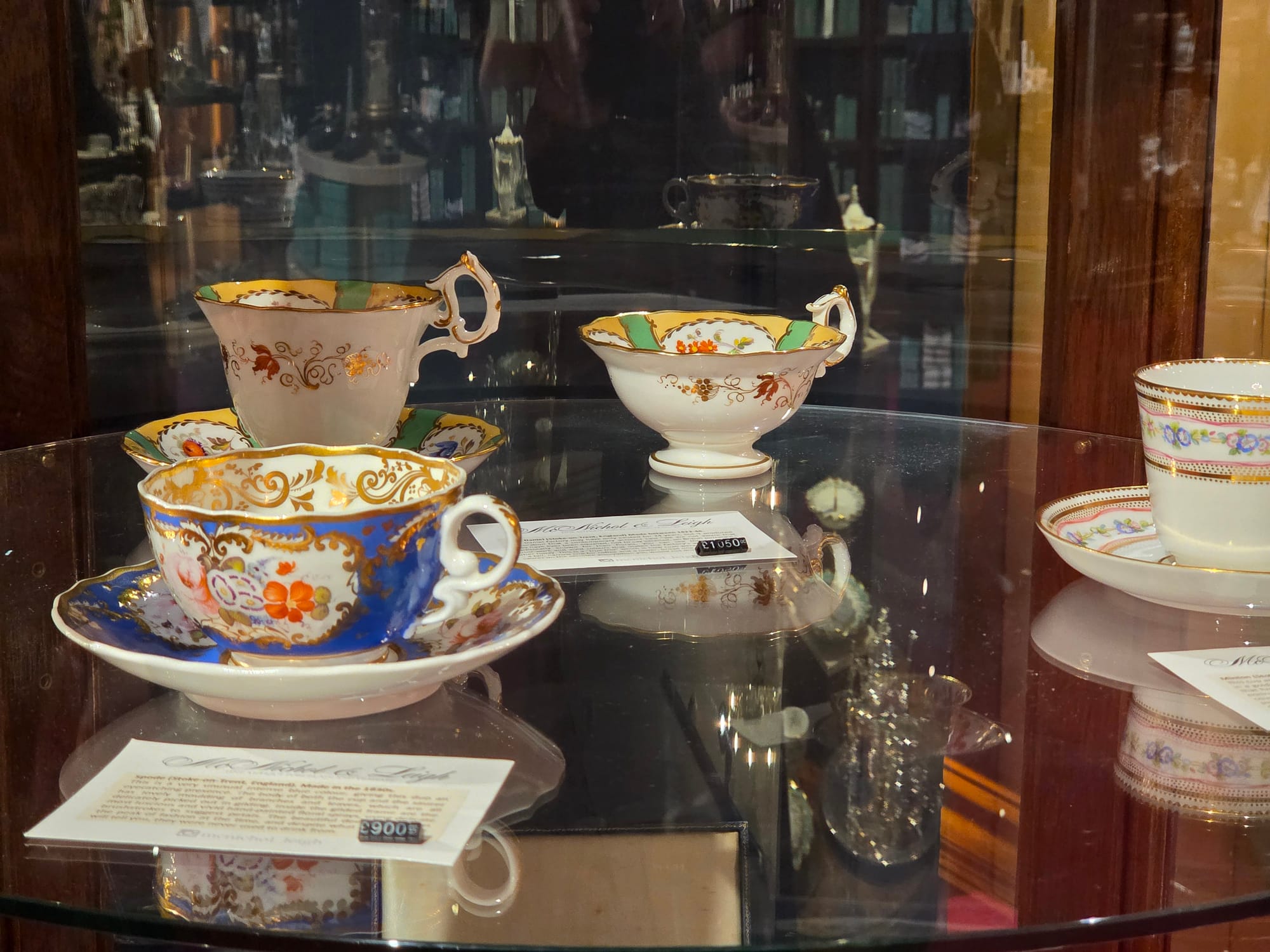
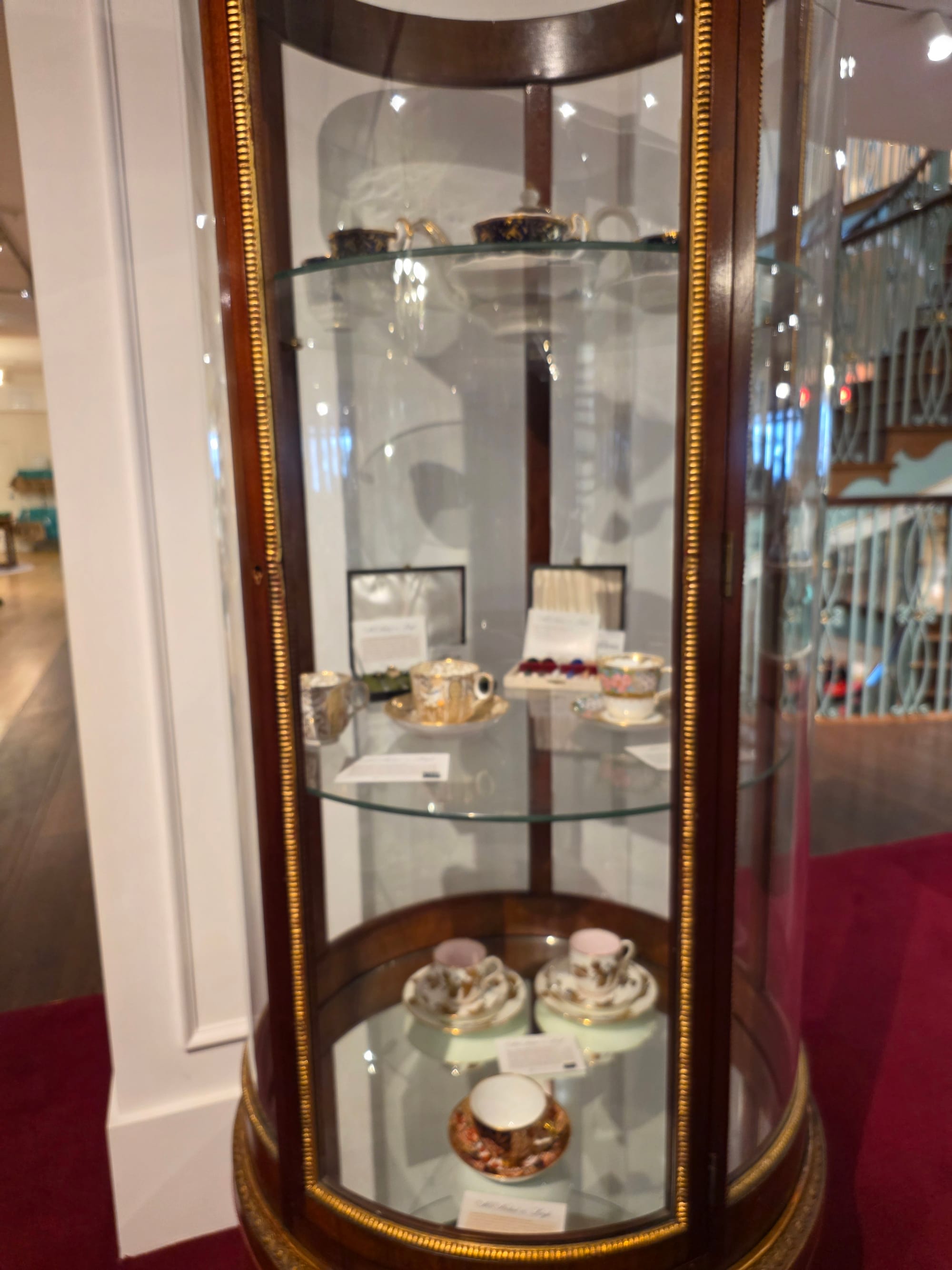
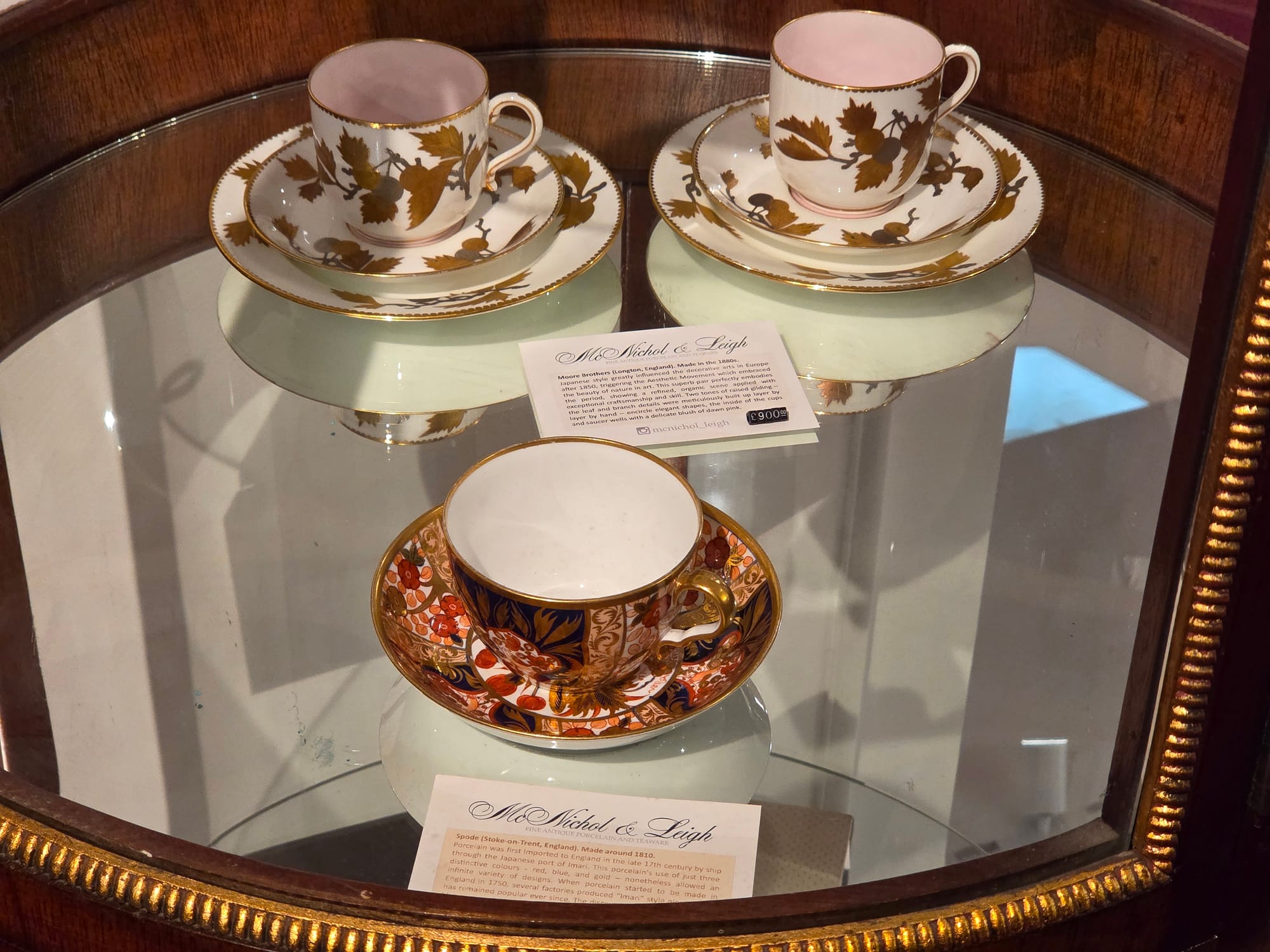
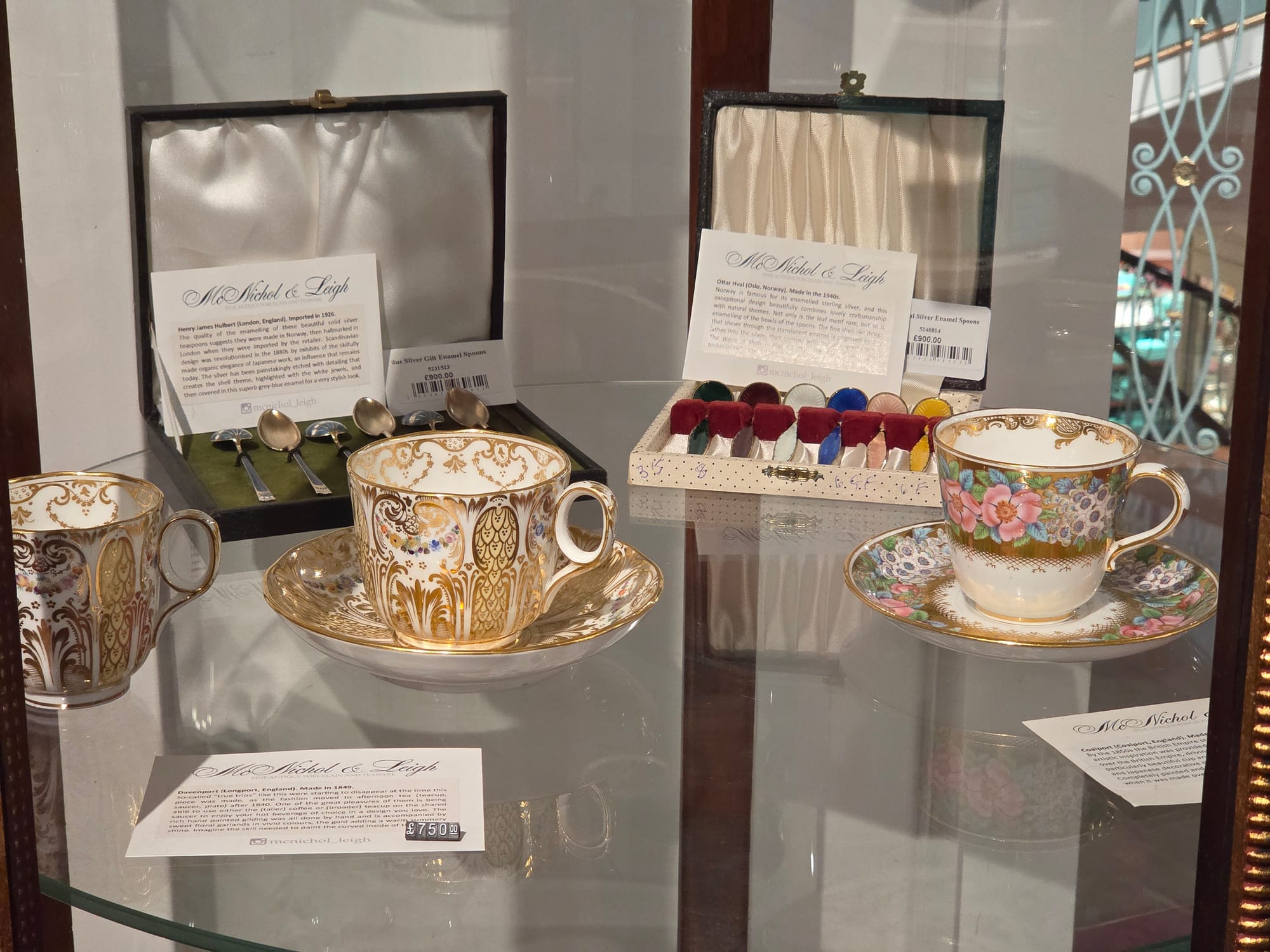
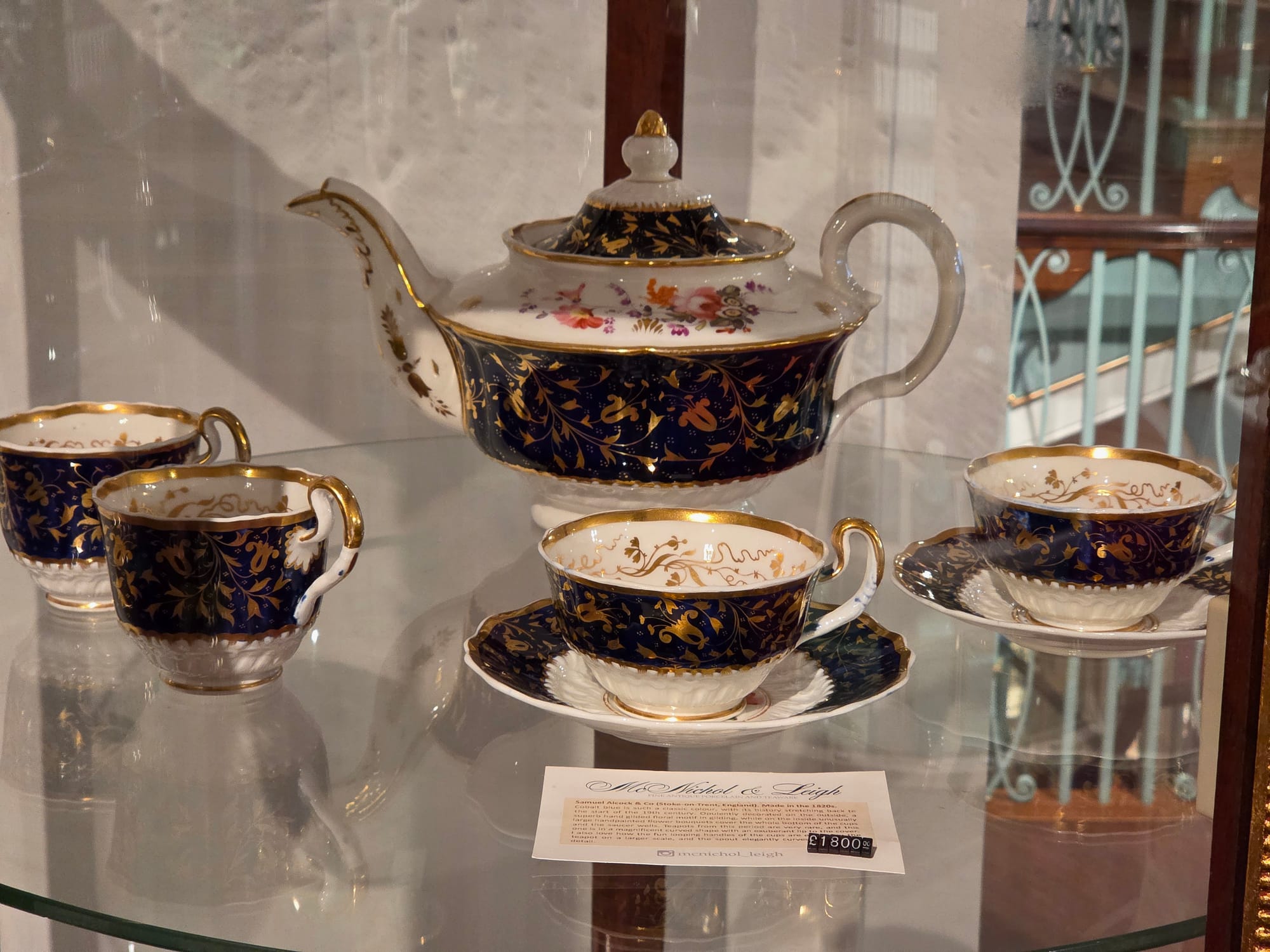
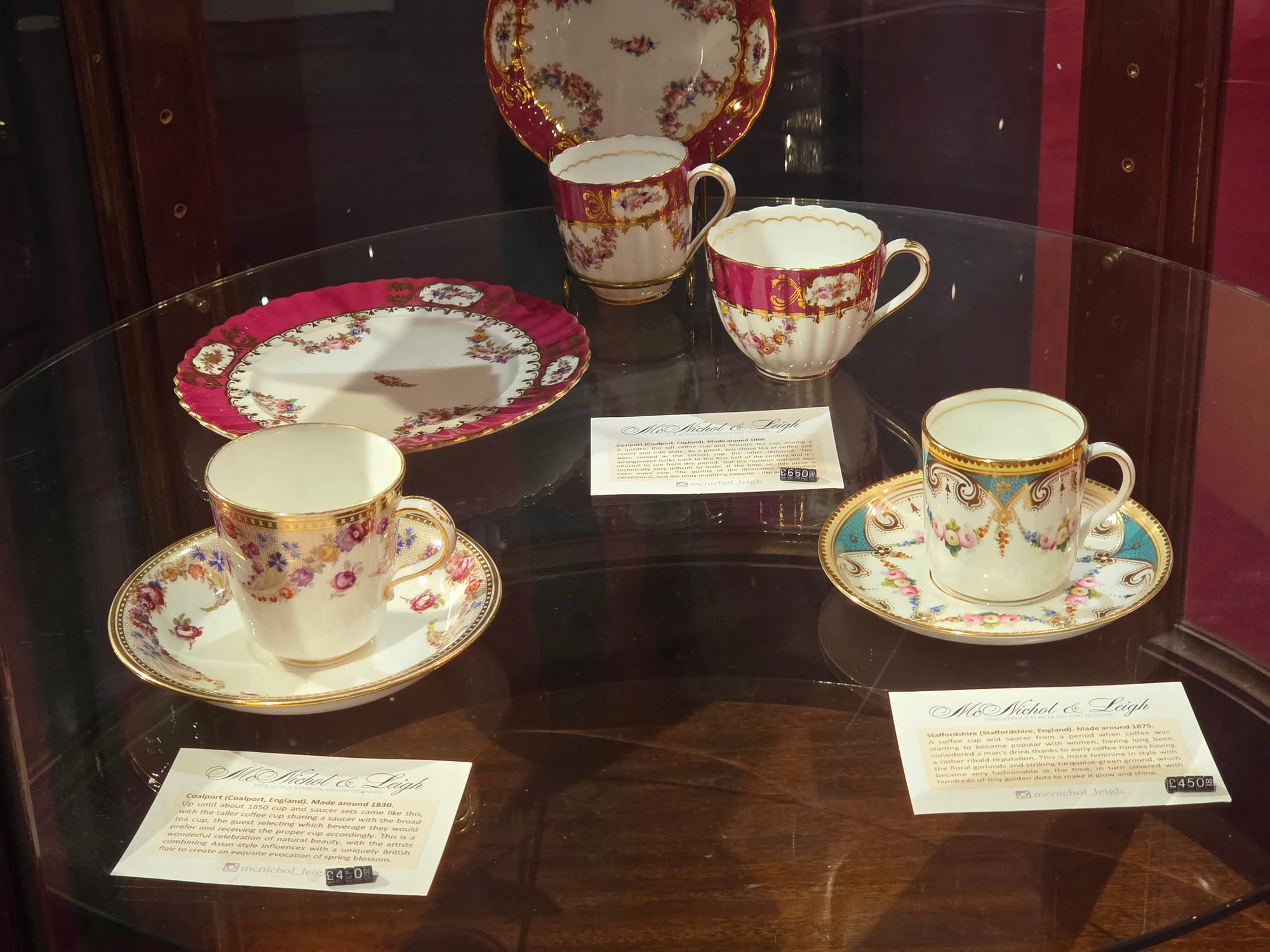
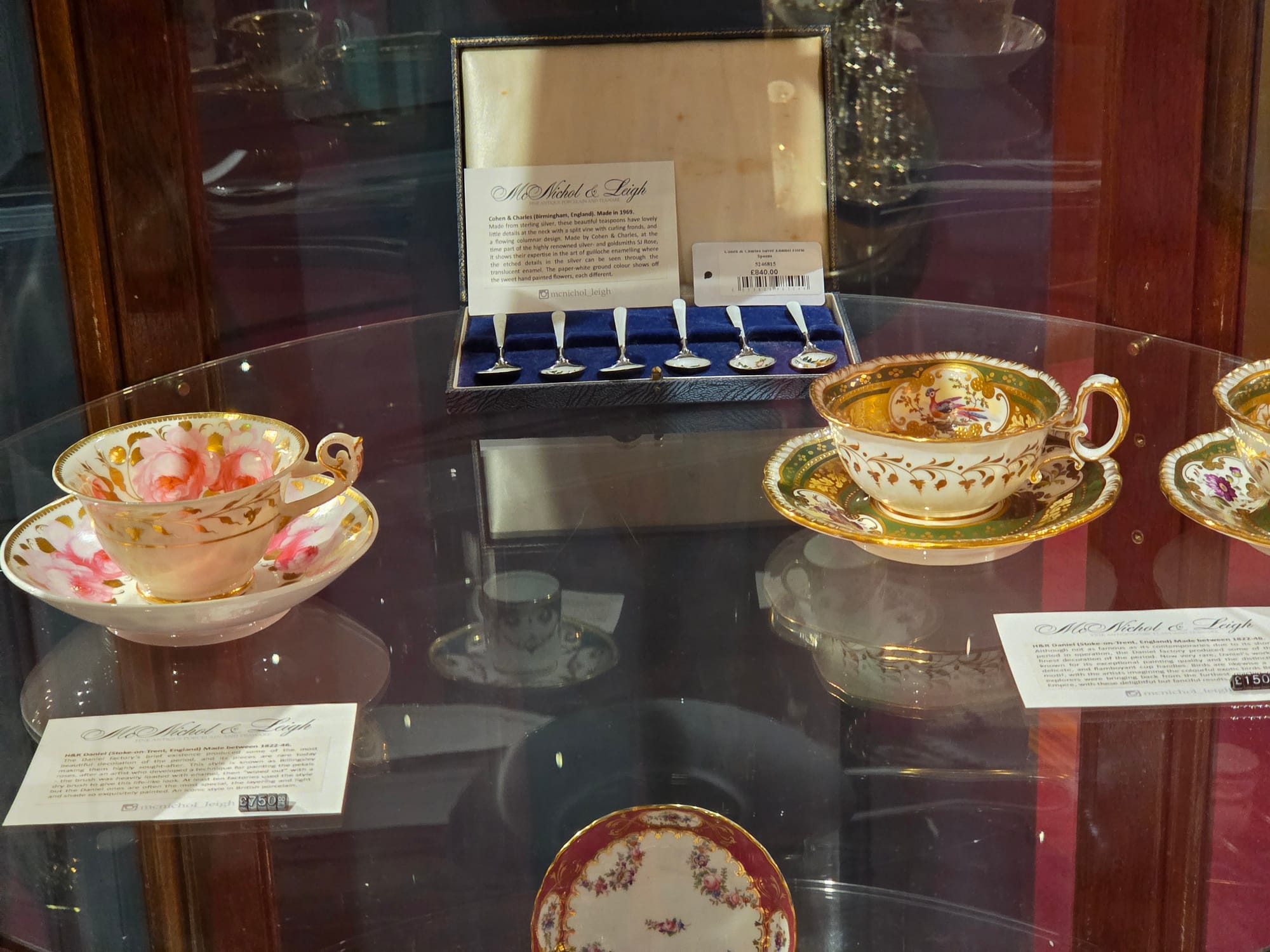
The contrast gets sharper once age and rarity come into it. In one Piccadilly cabinet recently, a fine porcelain dealer had a Spode teacup and saucer from around 1810, hand painted in the Imari style, priced at £900. A Samuel Alcock and Co cobalt blue tea set from the 1820s, made right here, was tagged at £1,800. An H&R Daniel trio from the same period, decorated in the rare Billingsley rose technique, was £750. These aren't museum pieces behind a rope. They're sat in a glass cabinet on a London shopping street, priced like fine art, because whoever is buying them knows exactly what they're looking at.
So the same object, made in the same six towns, by the same tradition of craftsmanship, gets treated as a bargain bin filler here and a collector's piece there, and the only thing that's changed in between is the postcode. That's not a comment on the pottery. It's a comment on us.
Photos by Jenna Goodwin
Why Everybody Else Gets It
People who don't live here tend to value our ceramics for a handful of reasons, and none of them are complicated.
Start with craftsmanship, and specifically the fact that it's visibly, unmistakably human. When Jo Newton talks about watching staff turn plates on the shop floor, she's describing a process that's barely changed in two centuries. In an age when almost everything you own was designed by a machine somewhere and assembled by a robot somewhere else, a mug that's passed through thirty pairs of hands, as Fortnum's say of their Emma Bridgewater pieces, is genuinely rare. No factory abroad can replicate it at a fifth of the price, because the thing being sold isn't really the mug. It's the hands.
Then there's heritage, and outsiders' willingness to actually say the words out loud. Spode's own marketing describes the brand as crafted in Stoke-on-Trent since 1776, and Fortnum's happily repeats it, because two hundred and fifty years of continuous production is an extraordinary claim that almost nothing else in British industry can make. Duchess China being the last historic fine bone china maker still on its original Staffordshire site is treated, rightly, as remarkable. None of that is marketing spin. It's just a fact that somebody outside this city decided was worth shouting about.
And underneath both of those sits scarcity, real or perceived. Someone paying £1,800 for a Samuel Alcock tea set is paying for the knowledge that nobody is making more of them, and that the skills behind it, hand gilding, layered hand painted florals, are getting harder to find every year. Fortnum's pledge to keep buying for another decade only means something because everyone in that conversation understands, without needing to say it, what the alternative looks like. Scarcity isn't a marketing technique. It's a warning. London has clearly heard it. Have we?
Photos by Jenna Goodwin
Why We Don't, and I Think We Should, Say So
This is the part where I stop reporting and start arguing, because I think somebody needs to.
The plainest reason is that familiarity breeds indifference. If you grew up two streets from a bottle kiln, if your nan worked in a factory making plates for royalty and never once mentioned it because to her it was just a job, pottery isn't exotic to you. It's Tuesday. Nobody stands in awe of the thing that's always been there. Londoners get to be astonished by Stoke-on-Trent because they only meet it in small, curated, expensive doses, a mug on a marble table with a story attached. We meet it every day, unpolished, in bulk, with nothing attached but a price sticker. Wonder needs a bit of distance to survive, and we've never had any.
Then there's the economics of it, which isn't our fault but has shaped how we think all the same. This city has spent the best part of fifty years watching the industry it built shrink, factory by factory, job by job. When your relationship with an industry is mostly loss, when the story you've absorbed is decline rather than heritage, it's hard to also hold the idea that the thing declining is world class. We've been so busy grieving it that we haven't always had the energy left to champion it too. Understandable. Also, I think, fixable.
And the factory shop culture, wonderful as it is for a bargain, has quietly trained generations of us to see seconds, end of lines and clearance tables as the natural price for Stoke ceramics rather than the exception. A Fortnum's customer sees a Duchess China mug once, in a beautiful box, with a story attached to it. A lot of us see the same names constantly, discounted, chipped on one handle, unbranded in a crate. Repetition at a low price teaches a low value, same as repetition at a high price with a good story teaches a high one. Fortnum's worked that out a hundred years ago. We're only just catching up.
But the reason I think matters most is that nobody here has been telling the story loudly enough, or often enough, or proudly enough. Fortnum's put Jo Newton in front of a journalist and let her say, completely unprompted, that Stoke does ceramics with gravitas, that pretty much only one area does it properly. Imagine if that confidence, that plain willingness to say out loud that we're the best in the world at this, was something Stokies said about ourselves as readily as a Piccadilly buyer says it about us. We should be the ones putting proudly made in Stoke-on-Trent on the tag, not waiting for someone else to do it for us.
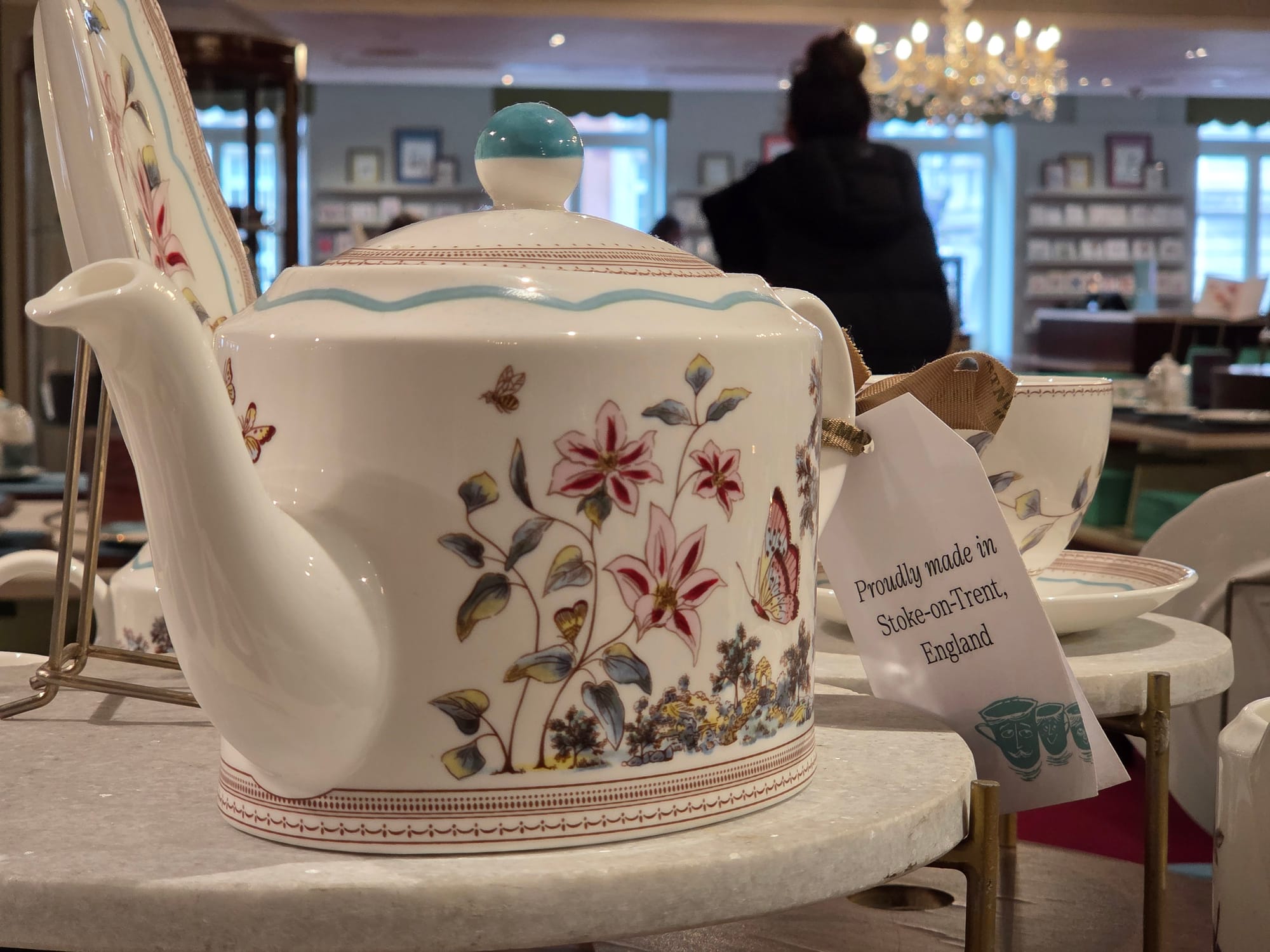
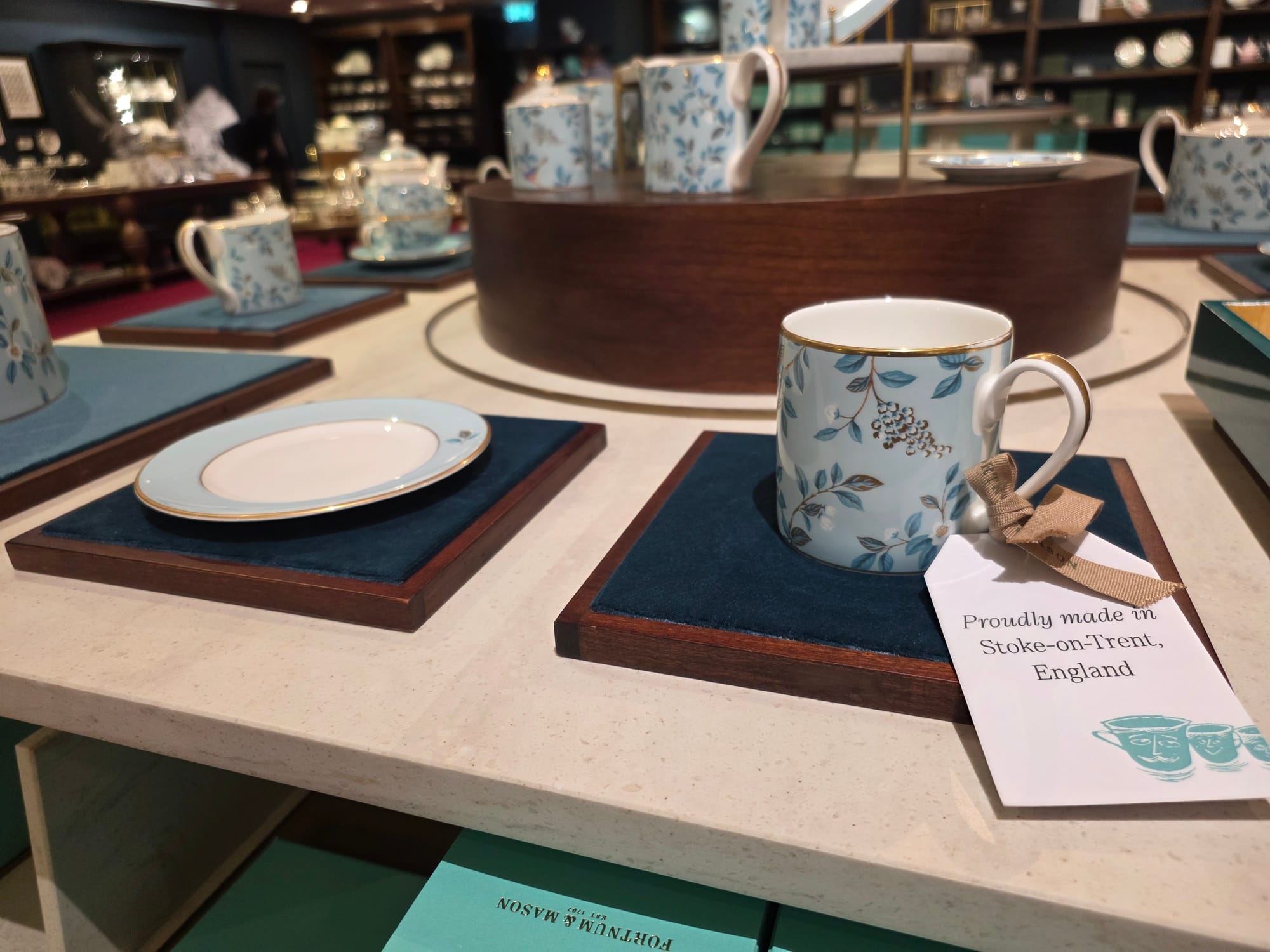
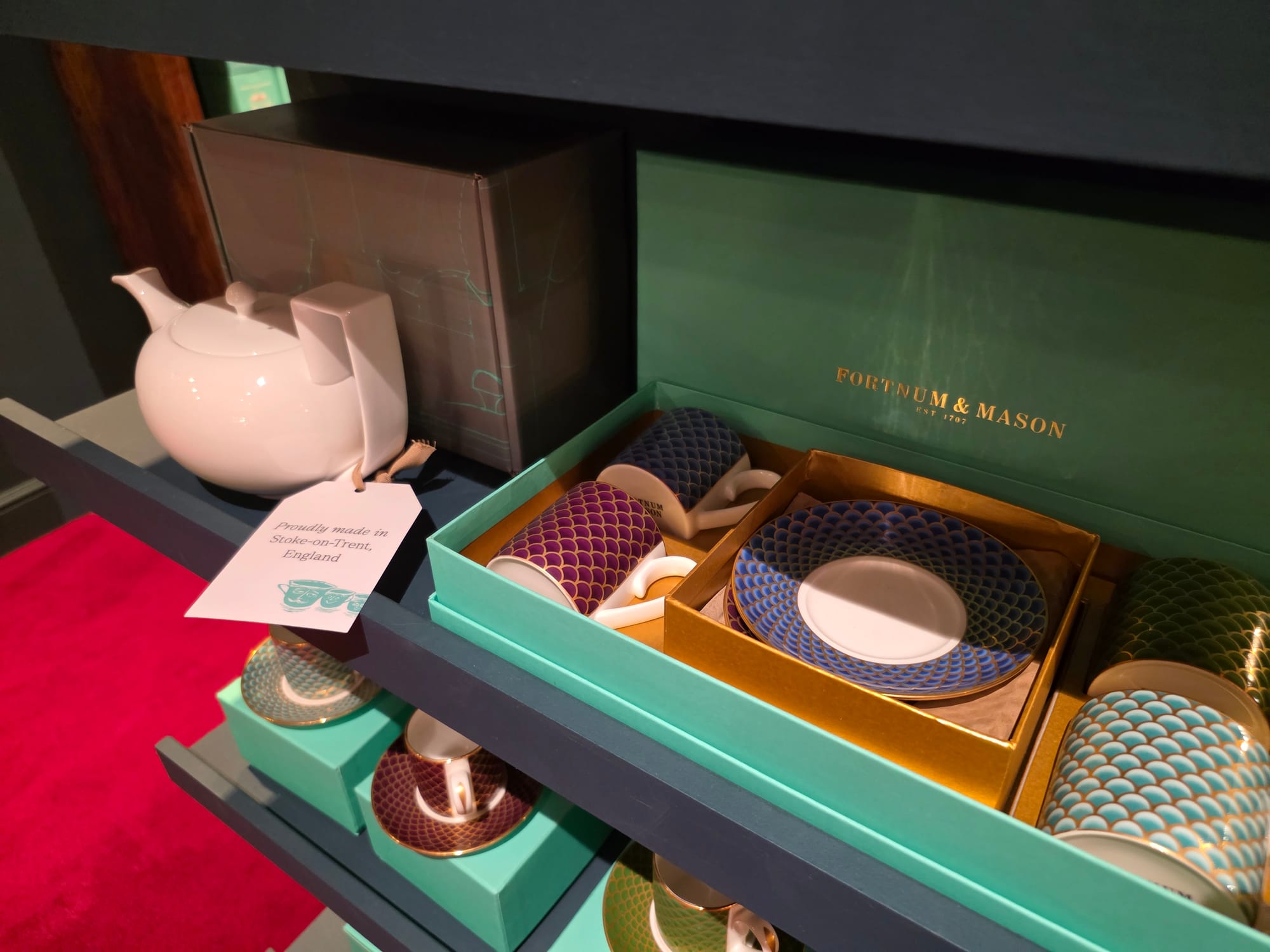
Photos by Jenna Goodwin
What We Can Actually Do About It
So here's the ask, and it's a genuine one.
Next time you need a mug, a mixing bowl, a set of plates for a new kitchen, buy it here first. Not as an afterthought, not only when the factory shop is on your way somewhere else, but as a first choice, made deliberately, the way a Fortnum's customer makes a deliberate choice to pay for Duchess China rather than a supermarket own brand. Visit the Ceramics Trail properly, not as a tourist activity for visiting relatives but as something you do for yourself. Take a factory tour. Watch somebody turn a plate. Let yourself be as astonished by it as a stranger in Piccadilly clearly is.
Talk about it, too. Tell people where your teapot came from. Say it without embarrassment, that this is the city that invented bone china as we know it, that Spode's been doing this since 1776, that Duchess China is the last of its kind still working out of its original Staffordshire factory. Put it on the tag yourself, in conversation, the way Fortnum's put it on theirs.
And if you run a business, a cafe, a wedding venue, an office, choose local ceramics when you're furnishing it, and say so on your website when you do. Every one of those choices is a small vote for an industry currently fighting for its life against energy costs and cheap imports, the same forces that pushed Royal Stafford into liquidation last year. Fortnum's have promised to keep buying from us for another decade. The least we can do, as the people who actually live here, is promise the same.
We taught the world how to do this. It's well past time we started acting like it.
Support local journalism
Help us grow the Signal
Every tip goes towards expanding what we cover, more reporters, more events, more of Staffordshire's stories told properly. If this was worth reading, help us do more of it.
Every contribution supports reporting, photography, and storytelling across the county.
Join The Staffordshire Signal on WhatsApp
Never miss a single breaking update, local news story, community event, or deep dive. See everything happening in Staffordshire first, straight to your phone!
Get Instant Updates
 Government awards Stoke-on-Trent up to £1.3 million to create new youth hubs
 The Staffordshire Signal Weekly: the Student Village opens, £9.14m for social care, and the Nicholson reopens its doors
 Stoke-on-Trent Awarded £9.14m to Transform Social Care
 Sir Ian and Lady Jane Dudson awarded highest borough honour in Stafford
 Nicholson Institute to reopen after major refurbishment