Spode Works is one of Stoke's most significant heritage sites, and Capital&Centric's own engineer says its buildings could be repaired rather than demolished. So why aren't they being? We investigate.
Capital&Centric wants to bring the old Spode Works back to life. Stoke-on-Trent City Council has backed the developer as its regeneration partner. But a planning application currently under consideration has drawn formal objections from ACAVA, the Spode Cultural Alliance, Spode Museum Trust and a string of individual studio holders, all of whom say they support redevelopment in principle and object to how this particular scheme has been brought forward. The Staffordshire Signal investigates.
Two hundred and fifty years in the making
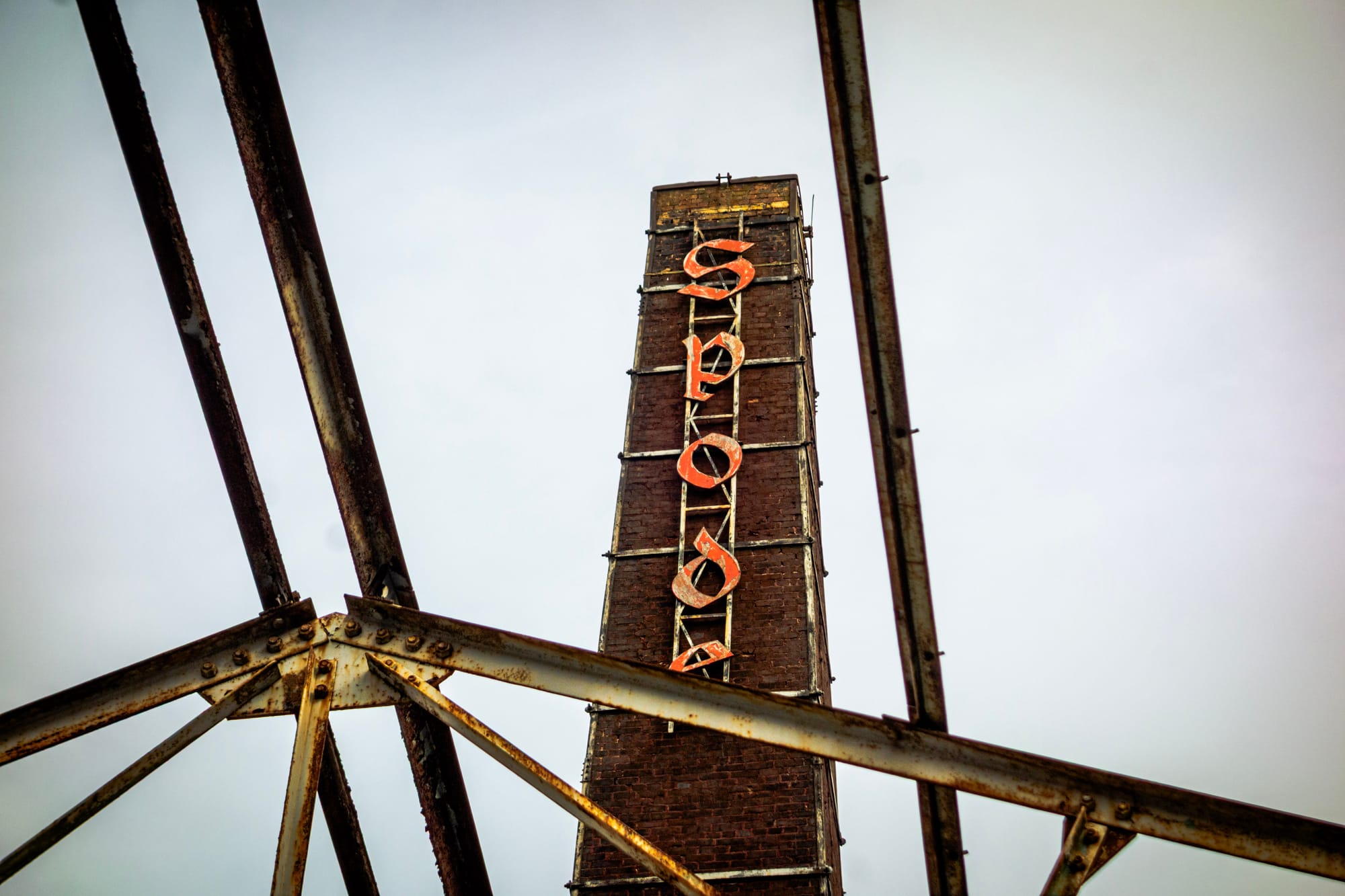
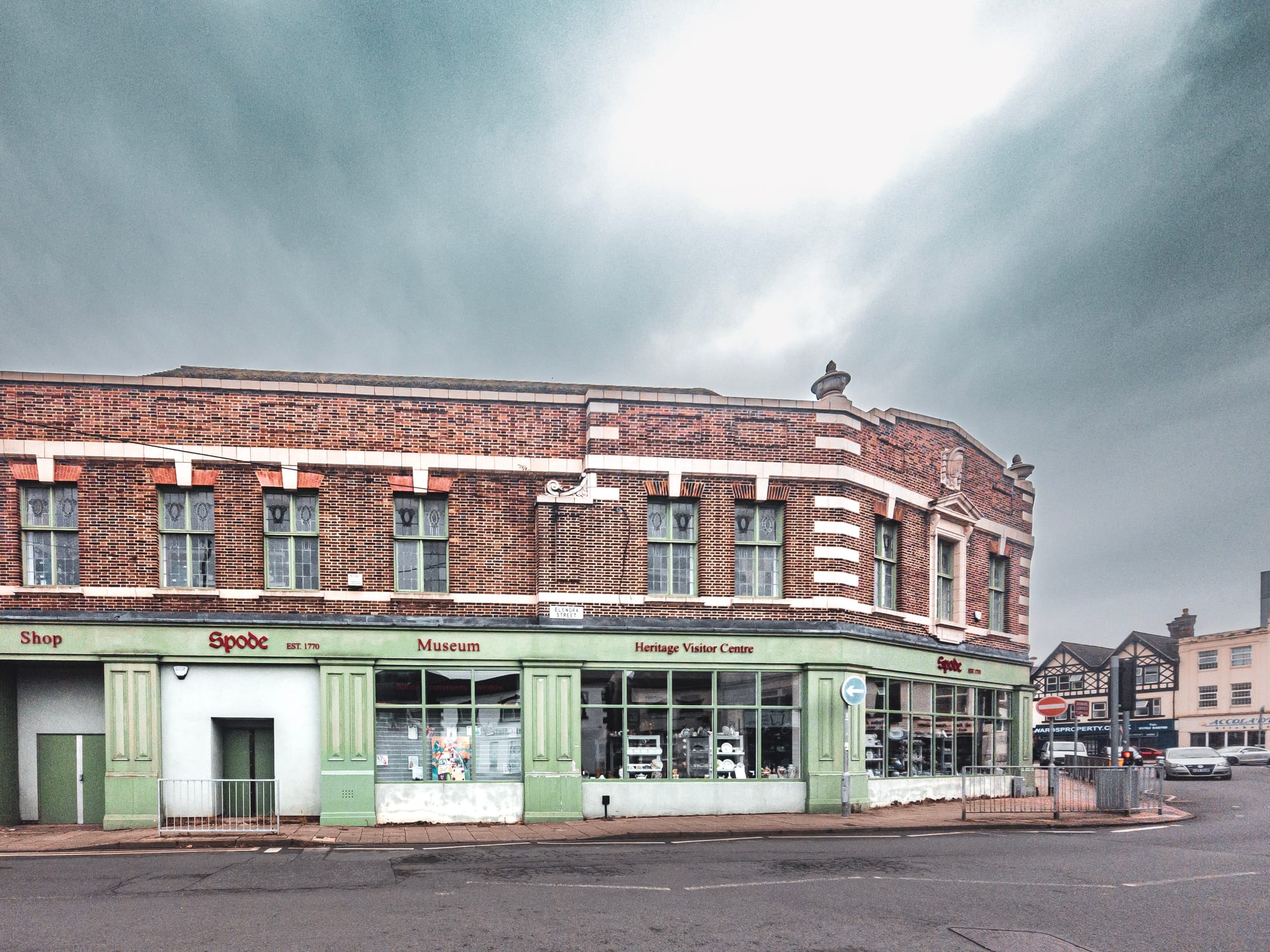
If you've ever eaten your Sunday dinner off a Blue Italian plate, you've eaten it off Spode. Josiah Spode set up shop on Church Street in the 1770s, and within a generation his factory had done two things that changed British tableware for good: perfected underglaze blue transfer printing, and cracked the formula for bone china. His son, Josiah Spode II, was made "Potter to the Prince of Wales" after the future king visited the works in 1806. Blue Italian, launched in 1816, is still in production today.
The pottery ran continuously on the same site for the best part of 250 years before finally closing in 2008. The council bought the site in 2010, and Portmeirion took over the Spode brand itself, which is why you can still buy new Blue Italian today even though nothing's been fired at Spode Works for nearly two decades. In the meantime, the buildings that remain, the ones this application is actually about, have gone from national manufacturing landmark to a Historic England "at risk" listing, which tells its own story about the last 18 years.
It's worth sitting with that for a moment, because it's the reason this planning application matters. This isn't a generic brownfield site with a convenient heritage backstory bolted on for the press release. It's 25% of Stoke's town centre conservation area, by the council's own appraisal, and the birthplace of an industry that put this city on maps as far away as royal dinner tables.
What's actually on site now
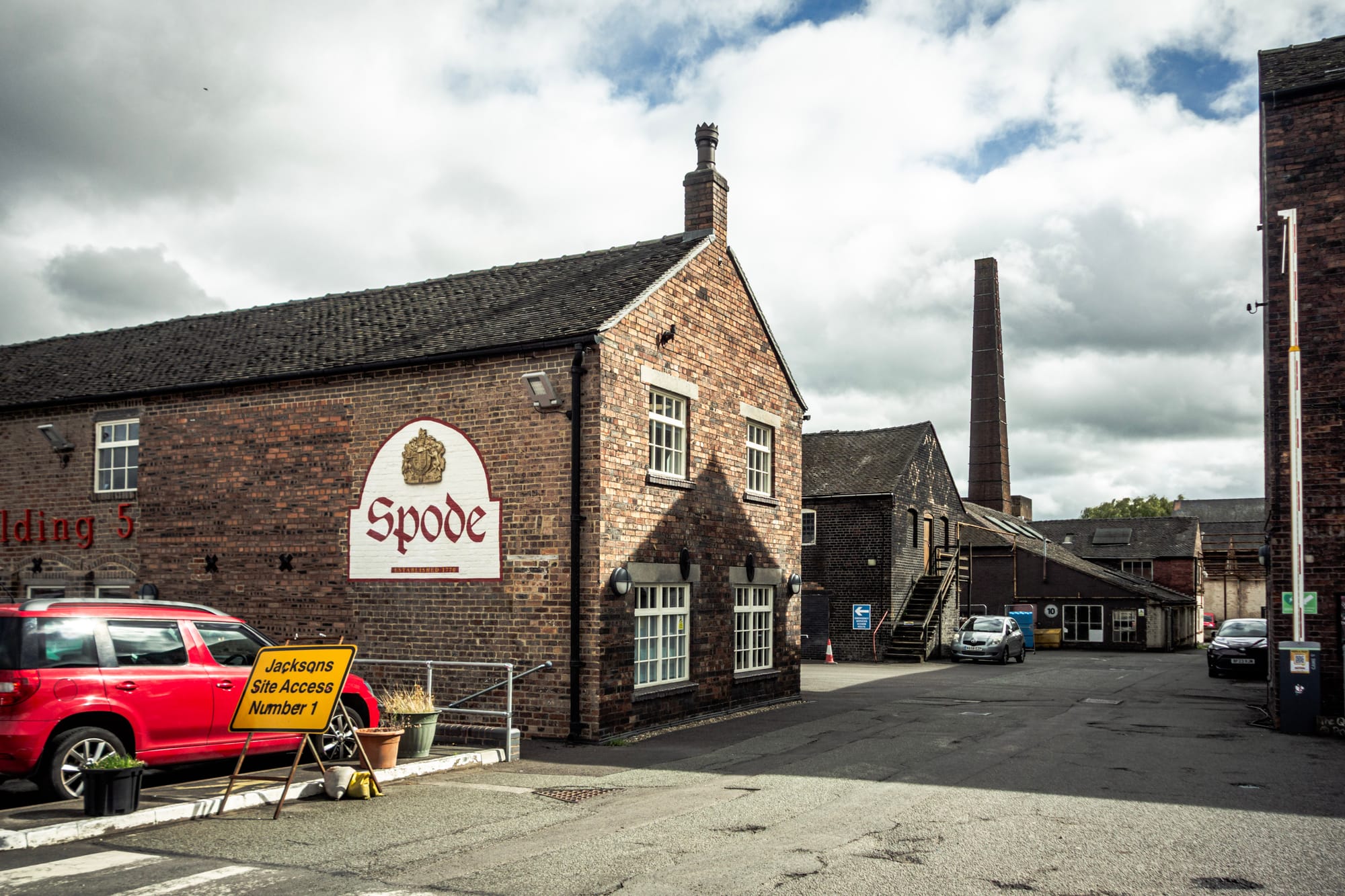
Spode Works isn't a derelict ruin. Since the pottery closed in 2008, the wider 10-acre site has grown into a working mixed community. Claybody Theatre has been staging productions there since 2017 and, since 2023, has been permanently based at The Dipping House, a converted industrial shed, on a lease with the council secured for a further 15 years. ACAVA runs 43 artist studios on site, alongside a public gallery and a regular programme of exhibitions and open studio events. The Potbank development, run by Spode Works Regeneration Limited (part of the Dog & Bone Group), includes a 22-room aparthotel, The Quarter restaurant and bar, and createch office space, and is itself currently expanding. The British Ceramics Biennial and Spode Museum Trust are also long-term presences on site.
The council's own announcement of Capital&Centric's appointment as development partner, in May 2025, was explicit that the new partnership "does not include the whole site, which will continue to host a diverse range of tenants such as Dog & Bone Ltd, ACAVA, BCB and Claybody Theatre".
What is true is that the specific buildings within this application's boundary, a cluster of former factory buildings distinct from the Potbank cluster, have been vacant for longer, in some cases since the pottery's closure, and several have fallen into disrepair.
The application
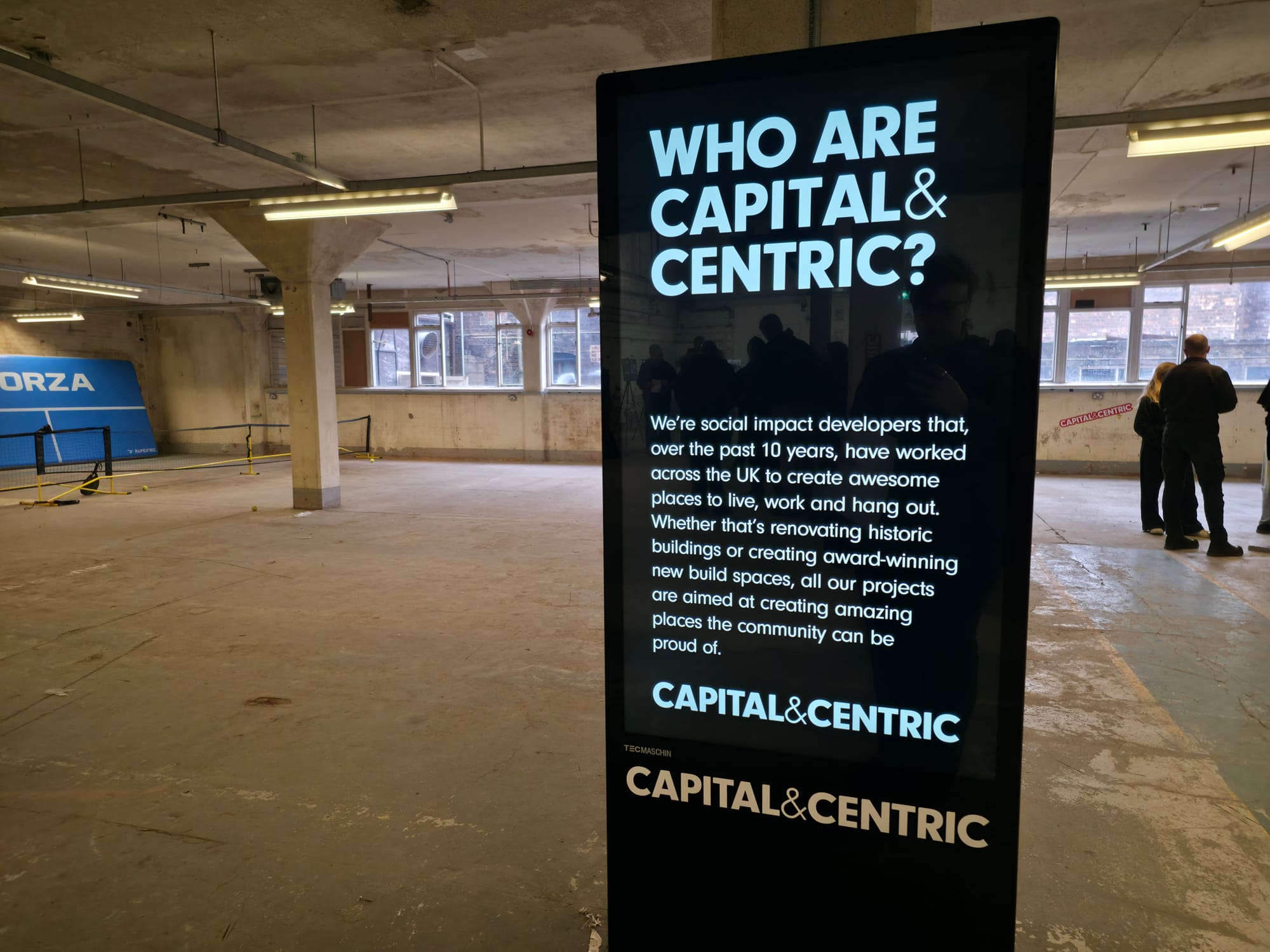
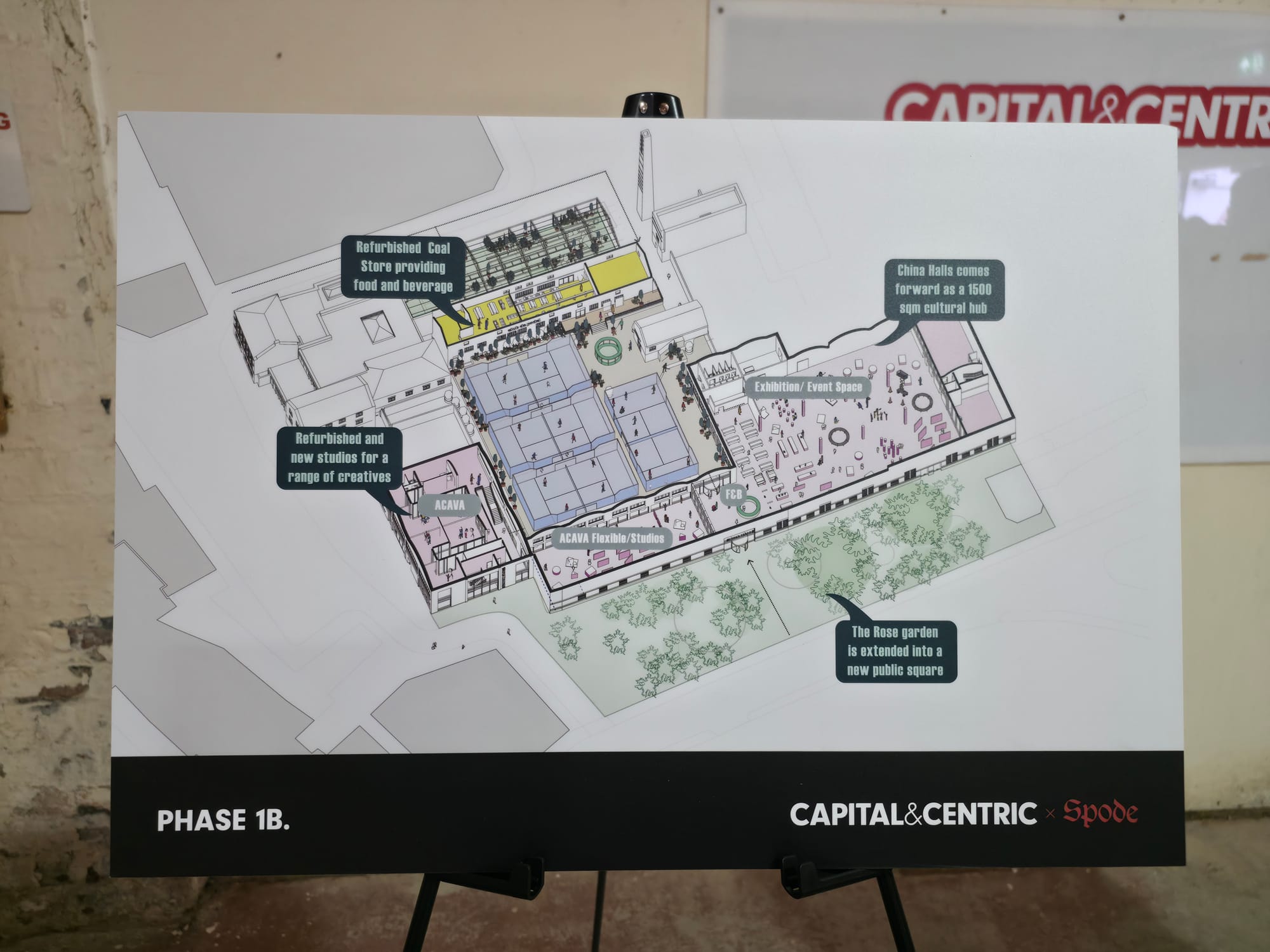
Capital&Centric's application to Stoke-on-Trent City Council (ref. 26/FUL/00608, with a linked listed building consent application 26/LBC/00612) covers the first phase of a wider masterplan for the site: repair and reuse of some of its oldest buildings, four new padel courts, a café, an exhibition venue in the China Halls, and the demolition of several factory buildings.
In a press release issued this month, C&C's Development Director Mark Edwards said:
"Spode Works is one of the most significant heritage sites in the country and this first phase is about getting the foundations right."
He added:
"All existing ACAVA and other cultural residents will not be affected or relocated by the Spode project and existing artists will be more than welcome to move into new space if they wish to or stay where they are."
The objection
Stoke-on-Trent City Council has received formal objections from ACAVA, the Spode Cultural Alliance (which represents ACAVA alongside the British Ceramics Biennial, Claybody Theatre, Friends of Spode Rose Garden and Spode Museum Trust), Spode Museum Trust separately, Stoke Creates, and several individual studio holders.
None frame themselves as opposed to redevelopment. Paul Riley, a studio holder at ACAVA, wrote: "I also support investment in and development of Spode Works that is without detrimental effect and has a positive impact on Spode Works' cultural organisations, small businesses, artists, Stoke Town and the wider city-region." Joyce Iwaszko, another ACAVA artist, put it more bluntly: "I am opposing current plans but am in full support of the site development." Kornelia Herms, who said she has watched the site "becoming the space to explore and exhibit in by many artists and groups" over the past 12 years, wrote: "The dream was and still is, that the site will be developed further in a complimentary manner to the wider cultural ecosystem of the city and local communities. I would definitely welcome that." Susan Clarke of Stoke Creates, the city's cultural compact, described Spode as "a landmark cultural hub" that the organisation has "been promoting the potential of the site to partners and stakeholders internally and externally for the last five years."
The objections centre on how this particular application has been brought forward, not on regeneration itself. The recurring points across the representations:
- Consultation. The Spode Cultural Alliance's formal objection states that it made repeated requests over roughly 12 months for detailed site plans, and that these were not provided in a form that allowed proper scrutiny until 6 July 2026, almost a month after the application was submitted on 11 June. ACAVA's Dan Southward, in the organisation's own submission, wrote that C&C "promised to share plans before they were officially submitted... As it stands, we feel the current application doesn't address key site issues including site logistics, parking, access, phasing of works, noise, pollution, site management and heritage." Ian Mood, an ACAVA studio artist, made a similar point about the process itself: "The current planning application does not address specific concerns about how the site development will affect existing tenants."
- Space. ACAVA's own submission states that the proposed replacement studio space does not match its current square footage, and does not include the dedicated gallery or communal space the current studios have. Dan Southward's submission adds that ACAVA's studios have operated at "between 90-100% capacity for the last 10 years," which is part of why the group says any reduction in space matters. It also describes a proposed move via a temporary space in the China Halls before a final move into the new unit.
- Padel and noise. Several objectors, including ACAVA and studio holders Aneliya Stoyanova and Joyce Iwaszko, cite what they describe as independent UK acoustic studies showing peak padel noise of 70 to 91 decibels, and argue that the site's brick-built, enclosed courtyards will amplify rather than absorb sound. Stoyanova wrote that "the Grade II-listed Spode Works yard is a hard-surfaced echo chamber, meaning noise will be amplified by historic brickwork." [We have not independently verified the 70 to 91 dB figure or its source, and have asked C&C for a copy of the submitted Noise Impact Assessment.]
- Heritage and demolition. Spode Museum Trust's Michael Escolme objected specifically on heritage grounds, pointing to the applicant's own structural condition survey (see below) and arguing that no viability case for the buildings' loss had been published. Kornelia Herms raised a related point about the China Halls specifically, saying the reduced space proposed there "making it less appealing and less useful for large events".
- Parking. Raised in nearly every objection. The application includes no formal on-site car parking within the application's red-line boundary, relying instead on existing off-site provision nearby.
- The May 2025 commitment. Several objectors quote a Stoke-on-Trent City Council Cabinet decision of 27 May 2025 (Section 192, clause 1.7): "Agreed (vii) – To approve the commitment that artists, arts organisations and cultural organisations already present on the Spode Site should be retained and facilitated to maintain their presence and meet their strategic development objectives as part of any approved site development plan. These organisations are ACAVA, British Ceramics Biennial, Claybody Theatre, Spode Museum Trust and Spode Rose Garden." They argue the application doesn't demonstrate how that commitment is being met for the buildings affected.
One objector, ACAVA studio holder Paul Riley, states in his submission that the application proposes demolition of "building 8P/ACAVA Studios," and raises concern that the application contains no clarity on reprovision for the studios there. We have not independently confirmed current occupancy of Building 8P and have put this directly to C&C.
What the application documents show
We reviewed the application's own supporting reports rather than relying on either side's summary of them. Three things stand out.
First, C&C's own structural engineer says demolition isn't structurally necessary. The Conservation Engineering Report, commissioned by C&C from Stand Consulting Engineers and covering buildings 8K, 8L, 8N, 8O, 8V, 8S and 8T among others, concludes:
"In general, the condition of the existing structures is not sufficiently poor to warrant demolition, and it would be feasible to carry out repairs to retain the building and extend its life. The Institution of Structural Engineers guidance is for demolition to the last resort when there is no viable alternative."
The same report continues:
"We understand that non-structural considerations have concluded that there is no viable use for some of the buildings. In this case, their loss can be considered acceptable if it helps to secure the long-term use of other buildings on the site."
Translated out of engineer-speak: the report's own author is saying these buildings could be repaired. The case for demolishing 8K, 8L, 8N, 8O and 8V, cleared to make way for the padel courts, rests on viability rather than structural condition. Spode Museum Trust made this same point in its formal objection, stating that no viability appraisal, marketing exercise or alternatives assessment has been published with the application. Having reviewed the document set provided, we can confirm no such appraisal appears in it. We've asked C&C directly whether one exists.
Second, the application's own documents are largely silent on Building 8P. The application description names 8P for demolition. The Planning Statement's building-by-building assessment (Appendix 2.0) covers 8S, 8A, 8V, 8U, 8T, 8D, 8E, 8C and the 8K/L/N/O group individually and in detail, but does not include an entry for 8P. The Preliminary Structural Appraisal, commissioned separately from Civic Engineers, likewise assesses every other building proposed for demolition or partial demolition in detail, with no equivalent section on 8P. The Heritage Statement does address it, briefly, concluding that demolition would have "a neutral effect" as the building "makes a very limited contribution to the significance of the principal listed building." We've asked C&C what the plan is for 8P's current use and occupants.
Third, the council's own technical consultees have raised independent objections. Stoke-on-Trent City Council's ecology consultee formally objected to the application on 3rd August 2026, stating that the submitted Preliminary Ecological Appraisal does not include roost assessments for Buildings 8B, 8L and Gordon House, all proposed for demolition, and that tree survey results referenced in the report have not been included. This is separate from the objections raised by artists and heritage groups. [We are still reviewing the remaining consultee comments from Highways, Air Quality, Environmental Health, the Lead Local Flood Authority and the Environment Agency, submitted between 4 and 19 August.]
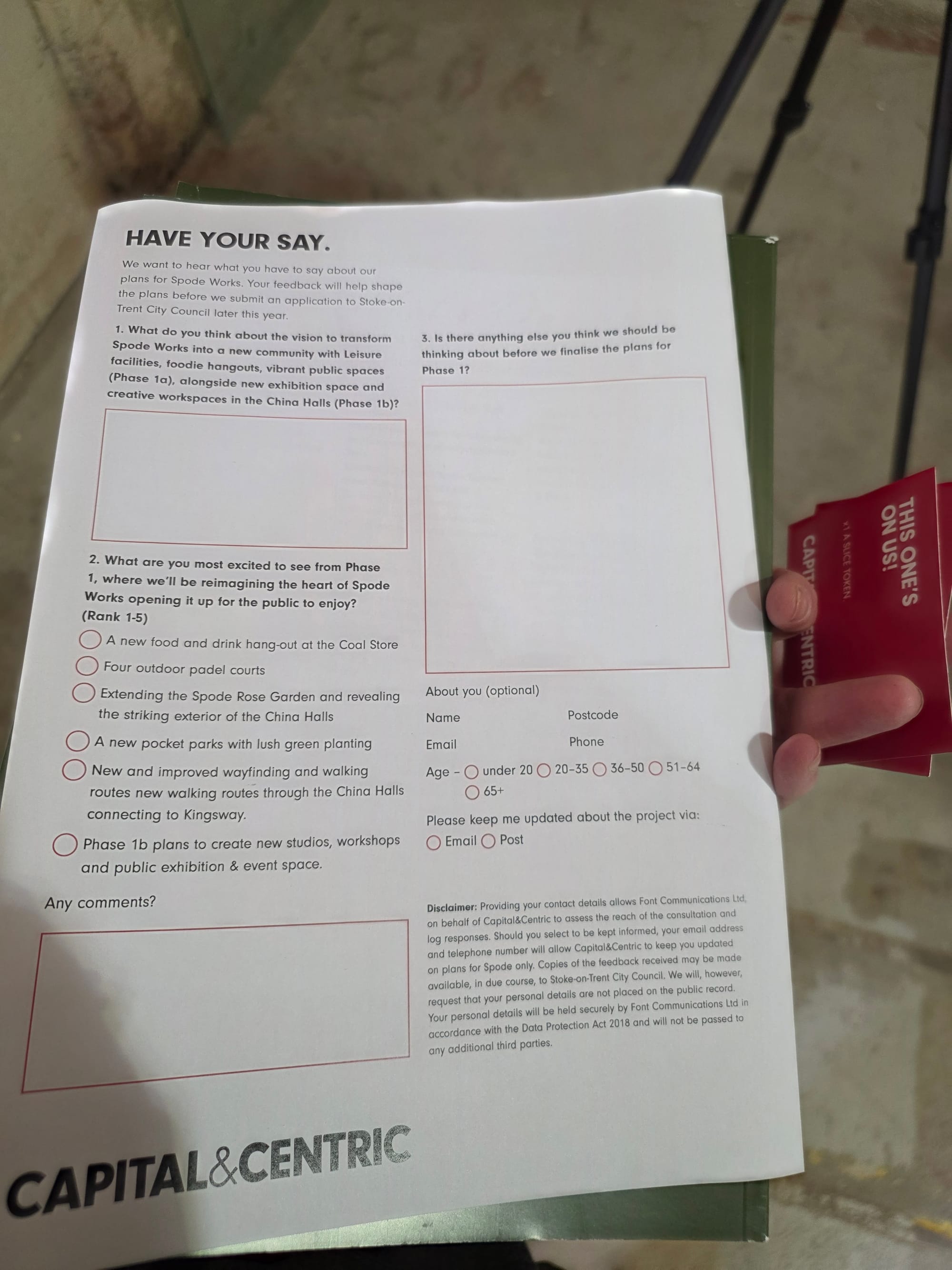
Padel, plans and paperwork: the consultation record
C&C's Consultation Report, prepared by Font Communications and submitted with the application, documents a public consultation that ran from 17 March to 6 April 2026: a newsletter to 3,050 addresses, a drop-in event on 26 March attended by roughly 300 people, and 146 questionnaire responses. That process took place before the application was submitted, and the numbers are set out in the applicant's own report.
That consultation appears to have covered the broad vision for the site, gardens, food and drink, padel, and exhibition space, rather than detailed technical engagement on individual tenants' space. The specific complaint from the Spode Cultural Alliance is about the latter: detailed site plans for their own space, which they say weren't shared until after the application went in. The two aren't necessarily in conflict, but they answer different questions.
It's also worth noting that some of the concerns raised in the August objections were already present in the March and April questionnaire responses recorded in C&C's own report. One respondent wrote: "As studio holders we need assurances that the cost of the studio spaces will be matched with what we are currently paying." The report's own summary of feedback states that "many respondents referred to padel as a fad."
Where this stands
The application remains under consideration. It was validated on 17 July 2026 and has an expiry date of 16 October 2026. At this stage, the decision is delegated to planning officer David Clarke rather than scheduled for committee.
The Staffordshire Signal has put the questions raised in this article to Capital&Centric and to Stoke-on-Trent City Council, and will publish their responses in full as they're received. This is a developing story.
Have information relevant to this story, or work or are involved at Spode Works? Get in touch: jenna@thestaffordshiresignal.co.uk

This article has been provided by The Staffordshire Signal. Click below to find more local news.

More from News from The Staffordshire Signal
-
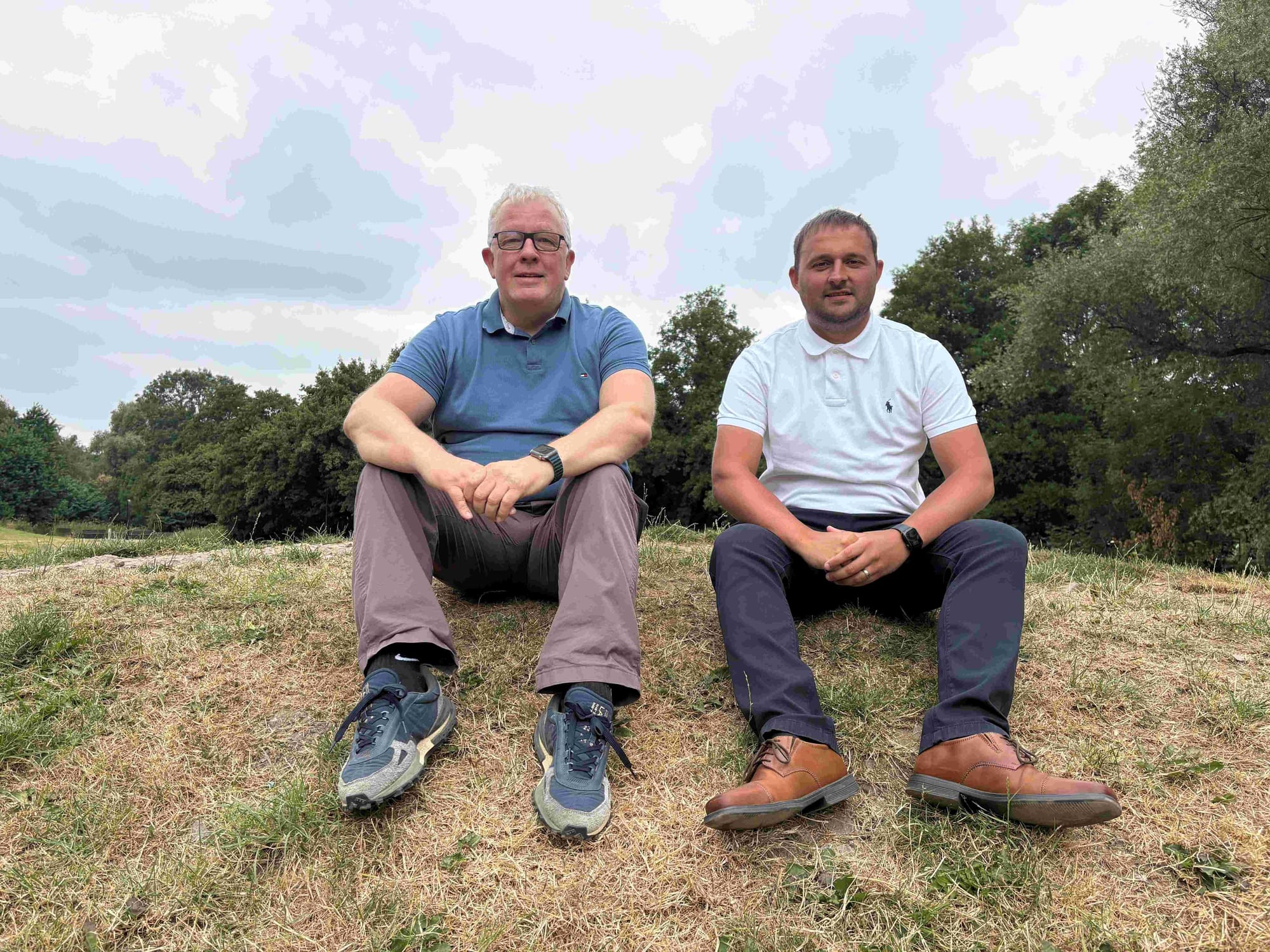 £135,000 Lyme Valley Pump Track Moves Forward - 5 Years After Residents Called for Action
Newcastle-under-Lyme Borough Council has approved plans to replace an ageing BMX track at Lyme Valley Parkway as part of the new administration’s drive to deliver visible improvements in communities.
-
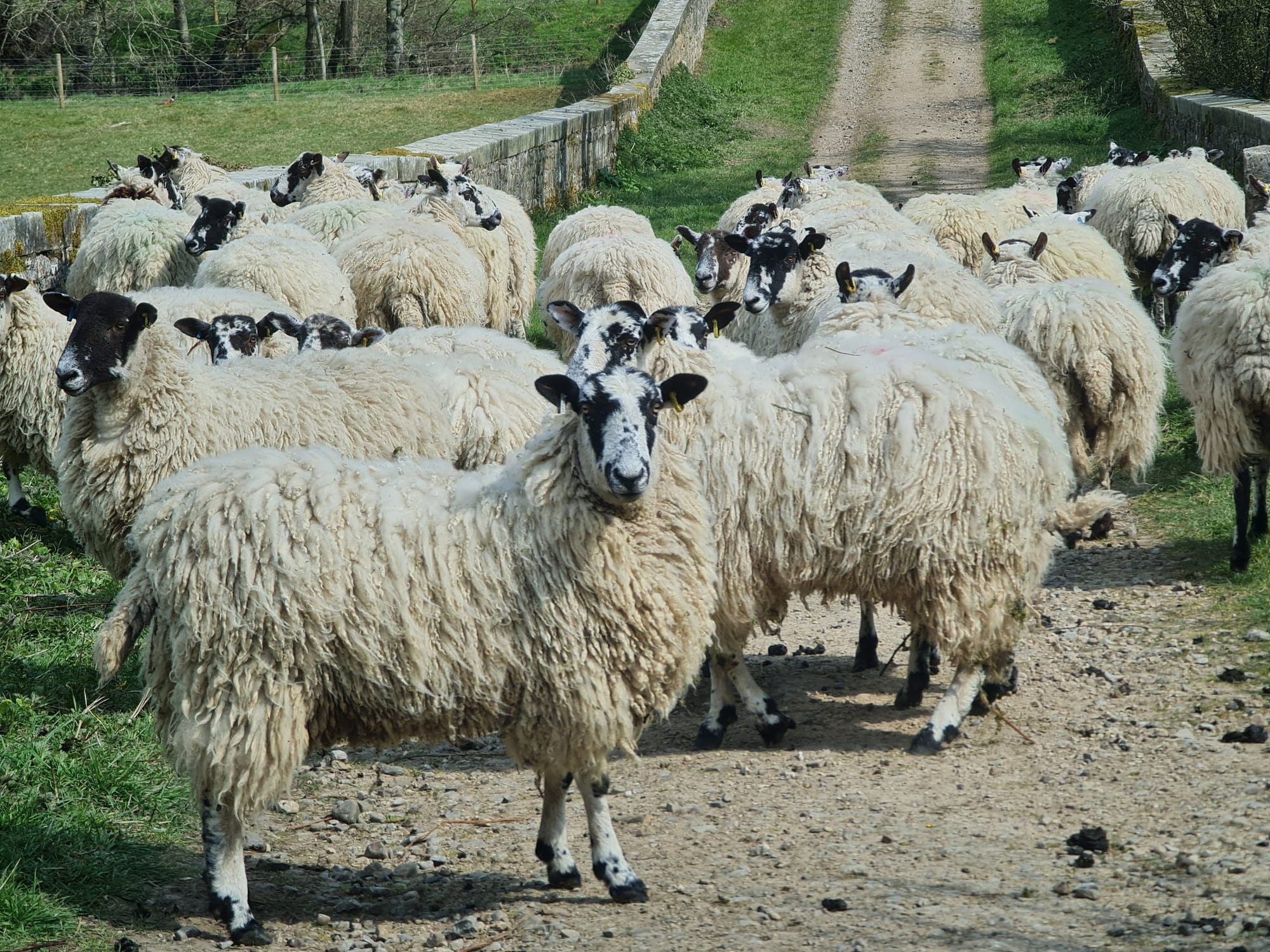 Staffordshire Farmers Urged to Shear Sheep Despite Bluetongue Concerns
Sheep farmers across Staffordshire are being warned that delaying shearing because of fears surrounding bluetongue could cause serious animal-welfare problems.
-
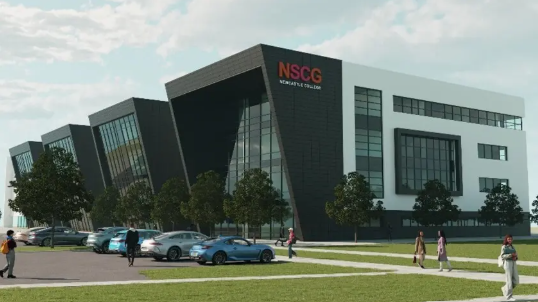 £34m College Boost to Create New Classrooms and Specialist Training Facilities
Colleges across Staffordshire are set to expand after securing millions of pounds in government funding - but work must continue to determine whether the investment can meet growing demand for post-16 places.
-
 Stoke-on-Trent Male Voice Choir to perform charity concert for firefighters
Stoke-on-Trent Male Voice Choir will perform a free charity concert in Newcastle-under-Lyme this September, raising support for firefighters and their families.
-
 Recovery work continues following major Sandyford fire
Recovery work and support for residents are continuing after the major Sandyford fire, with four properties identified as dangerous structures and a public appeal established for affected families.
Schedule
-
 Simon's Big New Thursday Thing
9:00pm - 11:00pm
-
 Loud and Local
11:00pm - Midnight
-
Loud and Local
Midnight - 7:00am